Buying Matcha, what to look out for
Buying Matcha: What to Look For
Buying matcha seems simple. Green powder, add water, and you're done. In practice, there's a huge difference in quality. Most people buy their first matcha incorrectly and then think they don't like it. That's not because of matcha, but because of what they bought.
If you're serious about drinking matcha, you need to know what to look for. Below you'll see exactly what's important.
What is good matcha
Good matcha always comes from Japan. Not from China or other countries. Japan has the right cultivation methods, shading techniques, and processing.
Within Japan, there are also differences. Kagoshima and Uji are the best-known regions. Kagoshima is known for soft, fresh, and accessible matcha. Ideal for daily use.
Ceremonial matcha vs. cheap matcha
You broadly have two types:
-
Ceremonial matcha
Soft, creamy, and hardly bitter. You drink this pure with water. -
Culinary matcha
Cheaper and more bitter. Used in recipes or smoothies.
If you want to drink matcha for energy and focus, always choose ceremonial matcha.
What to look for when buying matcha
- Color: bright green is good, dull or yellow is poor quality
- Texture: should be silky smooth, no grains
- Scent: fresh and slightly sweet, no musty smell
- Taste: soft and umami, not bitter
- Origin: clear region such as Kagoshima
Why cheap matcha is often disappointing
Cheap matcha is made from older leaves. Fewer nutrients, more bitterness. This results in a sharp taste and less effect.
Many people give up here and think matcha isn't for them. While they simply never tried good matcha.
Why we choose Kagoshima matcha
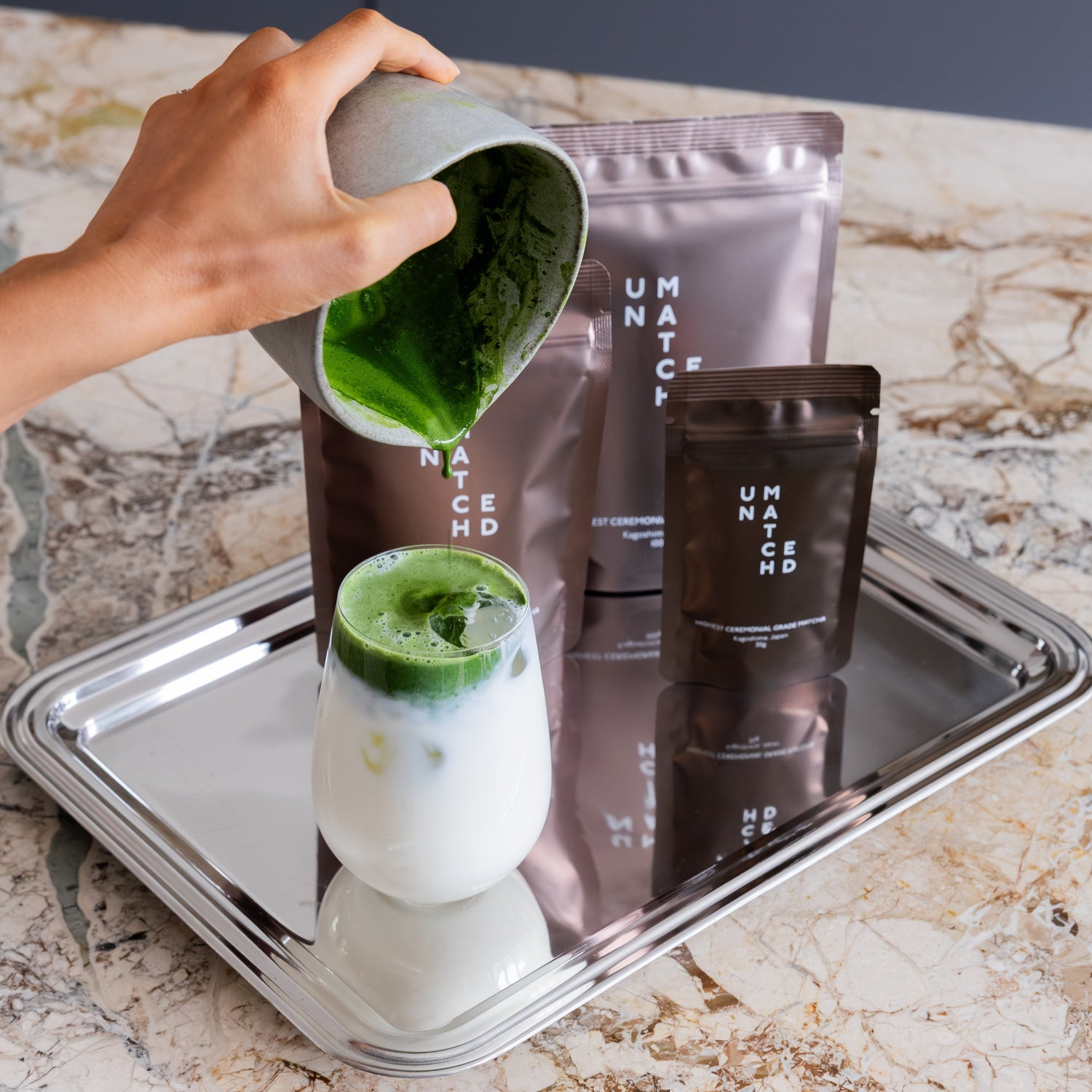
At Unmatched, we consciously choose Kagoshima. This region has volcanic soil and modern cultivation methods.
- softer taste
- less bitterness
- stable energy
- consistent quality
This makes it suitable for daily use. Not just for a ceremony, but for your workday.
How much matcha do you need
For a standard cup:
- 1 to 2 grams of matcha
- 60 to 80 ml of water
This gives you a similar energy boost to coffee, but without the crash.
Conclusion
Buying matcha is about recognizing quality. Pay attention to color, taste, origin, and type. Always choose ceremonial matcha from Japan.
If you do it right, you won't get bitter tea, but a gentle energy source that improves your focus without a dip.