Buying the best matcha: What should you look for?
03-08-2026 · 4 min read
Reading time: 7 minutes - Last updated: August 2026
Buying the best matcha in the Netherlands starts with a decision: ceremonial grade or culinary grade. Everything after that—origin, harvest, grinding method, and packaging—is refinement. For those who want to make the best choice immediately: choose ceremonial, first harvest, from Kagoshima, stone-ground.
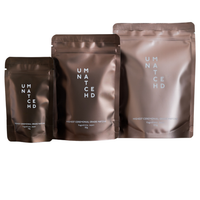
Want the best choice right away? Order the 30-gram introductory pack from Unmatched Matcha. Ceremonial, first harvest, Kagoshima. Free shipping on orders over €50. Delivered tomorrow.
Why this has become such a confusing market
The best matcha is ceremonial grade, first harvest, from Kagoshima or Uji, stone-ground to 5 to 10 microns, and airtightly packaged. You can recognize it by a bright green color, soft umami taste, and no bitterness.
The matcha market in the Netherlands has grown rapidly in recent years. That is good news for enthusiasts, but also confusing: from supermarket mixes to premium ceremonial variants, the supply is vast and the quality differences are significant. Also, read our article on buying matcha at the supermarket or online for a direct comparison of channels.
A nuance that few buying guides mention: ceremonial matcha is not a protected term. Every supplier is allowed to sell lower-quality matcha as ceremonial, regardless of origin or grinding method (Peeze, 2026, https://peeze.nl/de-8-koffie-en-thee-trends-van-2026/). The six criteria below will help you look beyond the label on the packaging, especially now that the demand for matcha is increasing worldwide. More on this in the matcha shortage of 2026 and how to recognize fakes.
Step 1: choose the right quality grade
There are two main categories: ceremonial grade for drinking pure and culinary grade for baking. Never buy culinary if you want to drink matcha pure.
|
Grade |
Color |
Taste |
Usage |
|
Ceremonial |
Bright green |
Soft, umami |
Drinking pure |
|
Premium culinary |
Medium green |
Slight bitterness |
Lattes, baking |
|
Standard culinary |
Olive green |
Bitter, sharp |
Baking, cooking |
|
Supermarket mix |
Yellow-green |
Sweet or bitter |
Not for drinking |
Step 2: pay attention to the origin
Kagoshima and Uji are the two strongest Japanese regions for ceremonial matcha. Matcha from outside Japan rarely meets the same quality standards.
Kagoshima has a subtropical climate and volcanic soil that provide a soft, umami-rich profile with slight sweetness. Uji has a long ceremonial tradition and a deep umami character. Both regions are excellent. The full difference is explained in Kagoshima versus Uji matcha, and you can read why Kagoshima scores so well in is Kagoshima matcha good.
Step 3: first harvest is decisive
First harvest (ichibancha) contains up to 3 times more L-theanine than second harvest and has the softest taste.
All true ceremonial matcha is by definition first harvest. If this is not mentioned on the packaging, it is likely not true ceremonial quality. More on this in first harvest matcha: why it matters so much.
Step 4 and 5: grinding method and packaging
Stone-ground matcha dissolves better and retains more taste nuance. Airtight and light-proof packaging protects against oxidation and UV degradation.
Stone-ground matcha is ground to a fineness of 5 to 10 microns in a traditional mill that produces about 30 to 40 grams per hour, which partly explains the higher price. Industrially ground matcha is coarser, dissolves less well, and has a flatter taste.
Airtight packaging prevents oxidation that affects color, taste, and L-theanine. Light-proof packaging protects against UV-induced breakdown of chlorophyll. Do not buy more than you can consume in 1 to 2 months after opening, and watch the expiration date: unopened, ceremonial matcha stays fresh for 12 to 24 months.
The complete buying check: 6 questions
Unmatched Matcha scores on all six: ceremonial grade, first harvest, Kagoshima, stone-ground, airtight and light-proof packaged.
-
Is it ceremonial grade, not culinary?
-
Is first harvest or ichibancha mentioned?
-
Does it come from Japan, preferably Kagoshima or Uji?
-
Is it stone-ground?
-
Is it in airtight and light-proof packaging?
-
Does the price hold up against these five criteria, rather than trusting the "ceremonial" label alone?
View the range via the webshop. New to matcha? Start with the 30-gram introductory pack or read the guide for matcha beginners first.
Still in doubt? Read the in-depth explanation on the best matcha powder or how to recognize matcha quality alongside this buying guide.
Frequently asked questions
What is the best matcha in the Netherlands?
Ceremonial grade, first harvest, from Kagoshima or Uji, stone-ground. Unmatched Matcha meets all criteria: first harvest from Kagoshima, stone-ground, without additives.
How do you recognize good matcha?
Four signs: a bright green color without yellow or olive tones, a soft umami taste without bitterness, an ultra-fine texture that dissolves effortlessly, and transparency regarding origin and harvest.
Is more expensive matcha always better?
Not necessarily. Because "ceremonial" is not a protected term, a high price can also stand for marketing rather than quality. The five criteria above are a more reliable indicator than price alone.
What is the difference between ceremonial and culinary matcha?
Ceremonial is softer, richer in L-theanine, and suitable for drinking pure. Culinary is more bitter, cheaper, and intended for baking and cooking.
What is the best quantity to buy?
Start with 30 grams as an introduction, enough for 15 cups. For daily use, 50 grams is the best balance between price and freshness. The 100 grams provides the best price per cup for regular drinkers.
Buying the best matcha in the Netherlands is simple if you know what to look for: ceremonial, first harvest, Kagoshima, stone-ground, airtightly packaged. Unmatched Matcha meets all points.
Start today: order the 30-gram introductory pack and discover what ceremonial matcha from Kagoshima really is. Free shipping on orders over €50, delivered tomorrow.