Matcha vs. Green Tea: The Complete Difference
26-04-2026 · 12 min read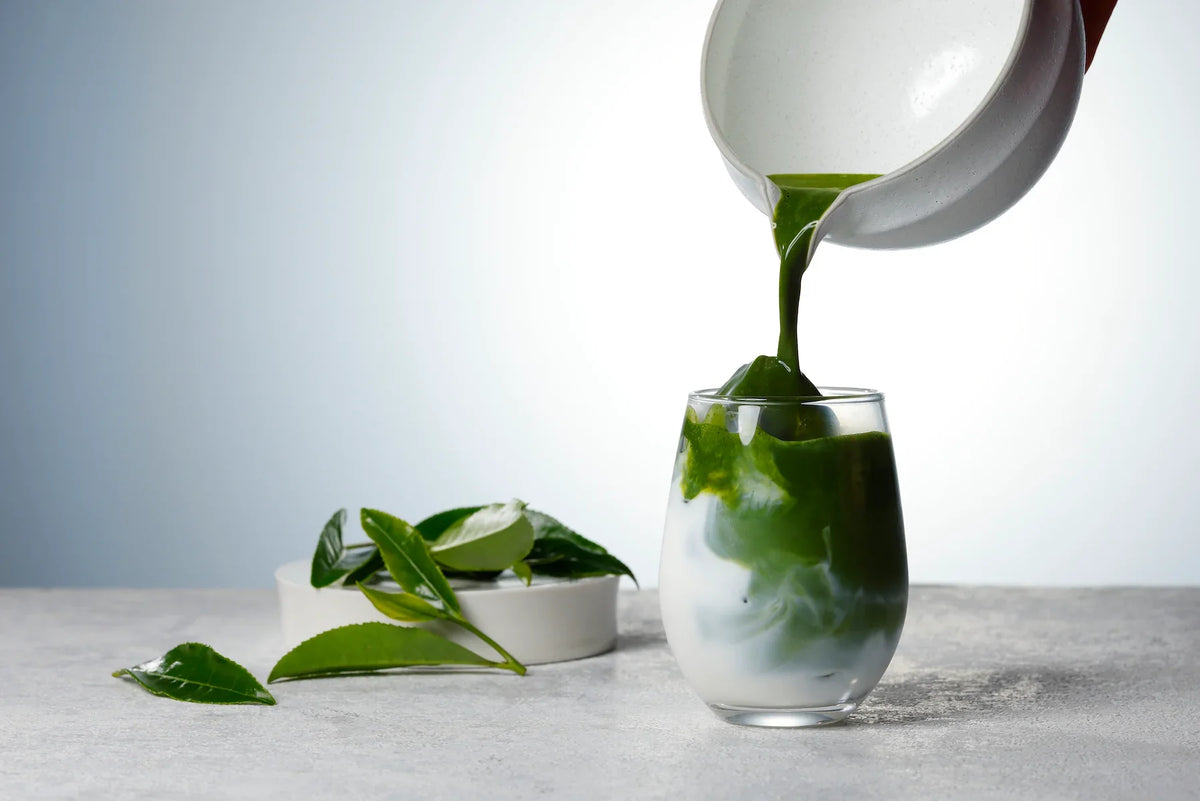
Matcha vs. Green Tea: The Complete Difference
Reading time: ±8 minutes | Last updated: April 2026
Matcha and green tea both come from the same plant (Camellia sinensis), but the differences in cultivation, processing, preparation, and nutritional value are so vast that they are effectively two different products. The primary difference: with green tea, you steep leaves in water and discard them, whereas with matcha, you consume the entire leaf as a finely ground powder. That one difference means that matcha contains up to 137 times more antioxidants per serving (Journal of Chromatography A, 2003).
In this article, we compare matcha and green tea across eight points: cultivation, processing, preparation, taste, nutritional value, caffeine, price, and suitability. After reading, you will know exactly which of the two best fits your goals.
The 8 differences at a glance
Quick answer: Matcha wins on nutritional value, antioxidants, caffeine, and depth of flavor. Green tea wins on price and convenience. Both are healthy, but matcha delivers significantly more active compounds per cup.
|
Feature |
Matcha |
Green tea |
|
Plant |
Camellia sinensis |
Camellia sinensis |
|
Cultivation |
Shaded for 20 to 30 days |
Unshaded (usually) |
|
Processing |
Dried, destemmed, ground into powder |
Dried, rolled, as whole leaves |
|
Preparation |
Powder is whisked into water |
Leaves steeped in water, then discarded |
|
What you consume |
The entire leaf (100%) |
Only the infusion (20 to 30%) |
|
EGCG per cup |
60 to 100 mg |
20 to 35 mg |
|
L-theanine per cup |
40 to 60 mg |
5 to 10 mg (infusion) |
|
Caffeine per cup |
approx. 64 mg |
approx. 30 mg |
|
Calories |
2 to 5 kcal |
1 to 2 kcal |
|
Flavor profile |
Umami, creamy, mildly sweet |
Light, grassy, sometimes bitter |
|
Color |
Bright green (jade) |
Yellow-green to light green |
|
Preparation time |
2 to 3 minutes |
3 to 5 minutes steeping |
|
Price per serving |
approx. €1.00 to €1.50 |
approx. €0.10 to €0.50 |
|
Shelf life after opening |
4 to 6 weeks (refrigerator) |
6 to 12 months (dry) |
Difference 1: Cultivation and shading
Quick answer: Matcha tea plants are shaded for 20 to 30 days before harvest. This drastically increases L-theanine and chlorophyll. Green tea plants usually grow in full sunlight.
The fundamental difference between matcha and green tea begins in the field. Matcha tea plants undergo the kabuse process: 20 to 30 days before harvest, they are covered with dark nets that block up to 90% of sunlight. This creates a stress response in the plant that has two consequences.
First, the amino acid L-theanine is preserved. Normally, sunlight breaks down L-theanine and converts it into catechins. By blocking the sun, the leaf retains up to 5 times more L-theanine than unshaded tea (Keenan et al., Journal of Medicinal Food, 2011).
Second, the plant produces extra chlorophyll to compensate for the lack of light. That is why matcha is bright green and green tea is yellow-green: the chlorophyll content in matcha is significantly higher.
Green tea plants generally grow in full sunlight. Shaded variants exist (such as gyokuro), but the standard green tea you find in the supermarket is unshaded.
Difference 2: Processing
Quick answer: After harvest, matcha leaves are steamed, dried, destemmed, and then slowly ground in granite stone mills. Green tea leaves are steamed, rolled, and dried as whole leaves.
Processing is where matcha definitively becomes a different product. After harvest, the best matcha leaves are briefly steamed (to stop oxidation) and dried. Then the stems and veins are removed. What remains is called tencha, the raw material for matcha.
Tencha is slowly ground in granite stone mills (ishi-usu). This process is exceptionally slow: one mill produces only 30 to 40 grams of matcha per hour. This slow grinding prevents overheating that would damage the delicate flavor compounds and EGCG. The result is an ultra-fine powder with a particle size of 5 to 10 microns.
Green tea undergoes a much simpler process: the leaves are steamed (Japanese style) or pan-fried (Chinese style), rolled into their characteristic shape, and dried. They remain intact as whole or partial leaves.
More about how matcha is made? Read what is matcha and why is it so healthy.
Difference 3: Nutritional value and antioxidants
Quick answer: Matcha contains up to 137 times more EGCG than green tea per serving. Because you consume the entire leaf, you get all the nutrients, while with green tea, 60 to 70% remains in the leaves.
This is the difference that has the most impact on your health. With green tea, you steep leaves in hot water and then throw them away. Research shows that this process only transfers 20 to 30% of the catechins, vitamins, and minerals from the leaves into the water. The rest disappears with the leaves.
With matcha, you drink the entire leaf as a powder. You therefore get 100% of everything the leaf contains: EGCG, L-theanine, chlorophyll, vitamins A, C, E, and K, calcium, iron, zinc, and selenium.
EGCG comparison per serving
|
Compound |
Matcha (2g) |
Green tea (cup) |
Difference |
|
EGCG |
60 to 100 mg |
20 to 35 mg |
3x to 5x more |
|
L-theanine |
40 to 60 mg |
5 to 10 mg |
4x to 12x more |
|
Chlorophyll |
High |
Low to medium |
Significantly more |
|
Vitamin C |
Present |
Partially in infusion |
More in matcha |
|
ORAC (antioxidant score) |
1,573 per gram |
253 per gram (estimated) |
6x more |
An in-depth analysis of EGCG and its function can be found in EGCG in matcha: the most powerful antioxidant explained.
Difference 4: Caffeine and the energy effect
Quick answer: Matcha contains about 64 mg of caffeine per cup, green tea about 30 mg. But the difference is not just in the amount: due to L-theanine, the caffeine in matcha works more gradually and for longer, without a crash.
Matcha contains about twice as much caffeine as a cup of green tea. But the difference in how that caffeine feels is at least as important as the quantity.
In green tea, the caffeine is "free": it is absorbed quickly and provides a mild, short-lived boost that disappears after 1 to 2 hours. In matcha, the caffeine is bound to high concentrations of L-theanine, which slows absorption and extends the effect to 4 to 6 hours. The result is what matcha drinkers describe as "calm alertness": focused without being tense, energetic without feeling jittery.
Read the full analysis in L-theanine in matcha: how it improves your focus and how much caffeine is in matcha.
Difference 5: Taste and texture
Quick answer: Matcha tastes umami-rich, creamy, and mildly sweet. Green tea tastes lighter, grassier, and sometimes astringent. The difference comes from the higher concentration of amino acids (umami) and chlorophyll in matcha.
Taste is perhaps the most striking difference for those who sample the two side-by-side. Ceremonial matcha has a deep umami taste: full, savory, almost bouillon-like, with a creamy body and a mildly sweet finish. That umami comes from the high concentration of free amino acids (especially L-theanine and glutamate) that are preserved by the shading process.
Green tea tastes lighter, fresher, and more botanical. Good Japanese sencha has a pleasant grassy tone with a subtle sweetness. However, the body is thinner than matcha, and if steeped too long or with water that is too hot, green tea quickly becomes bitter and astringent (drying in the mouth).
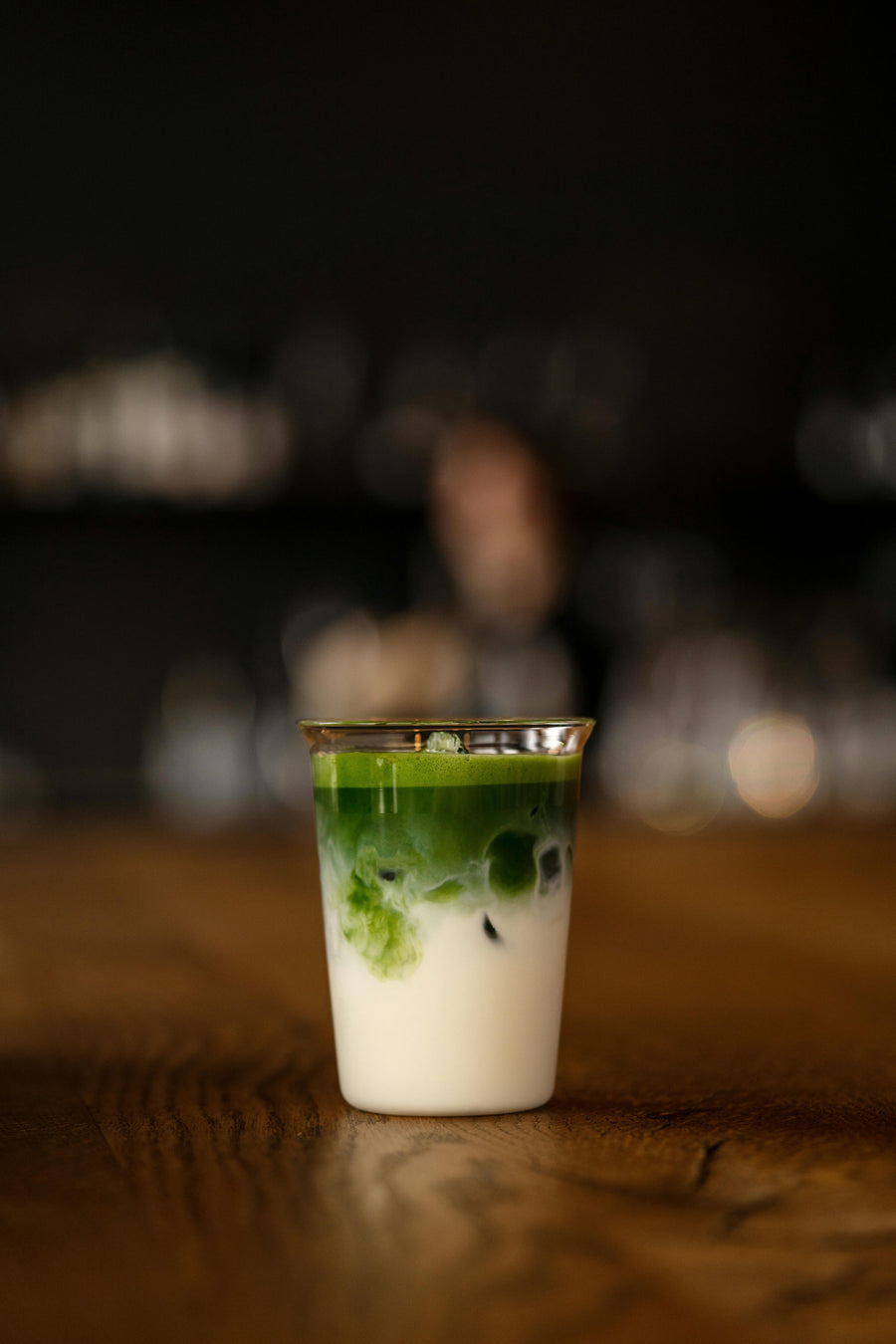
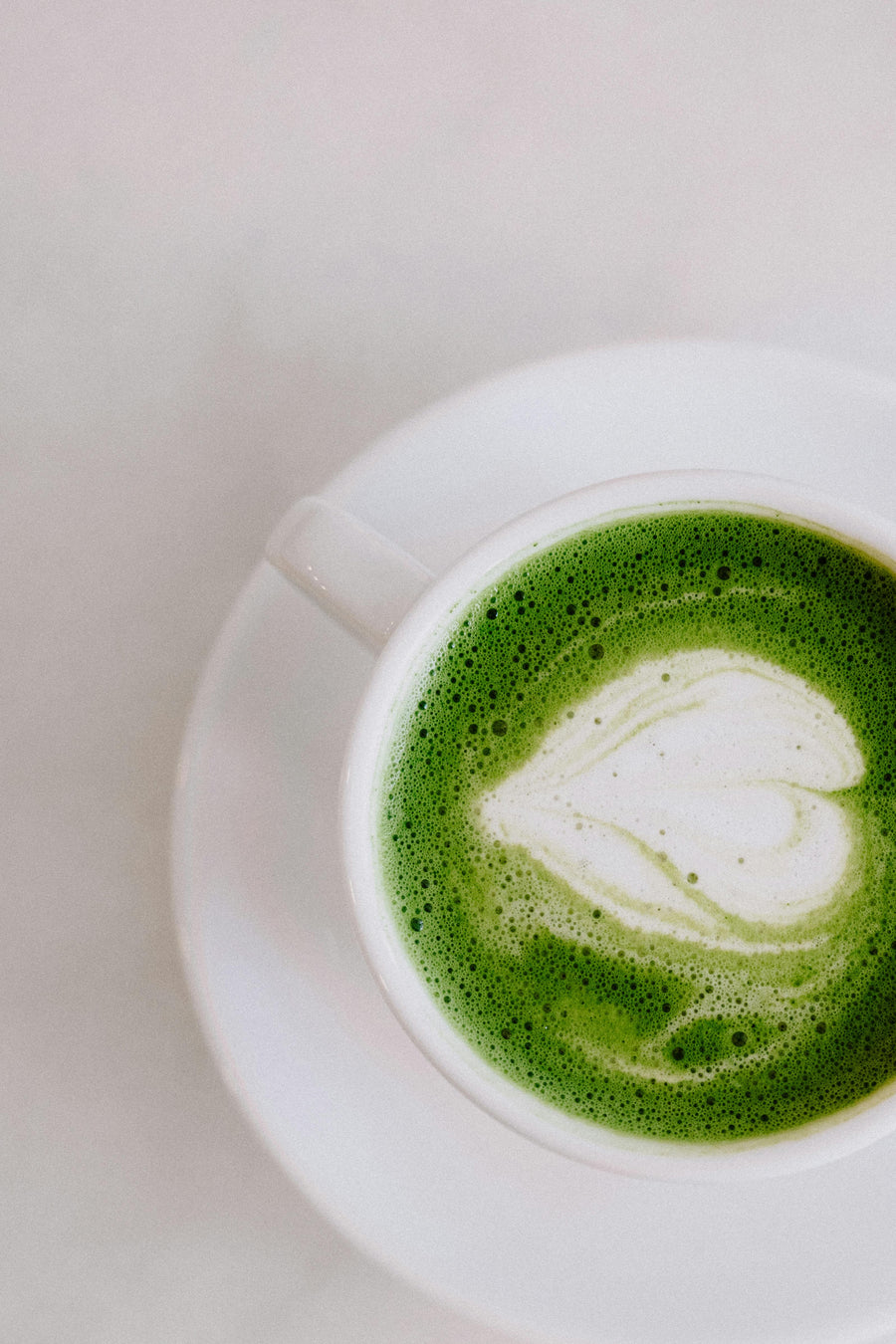
Matcha also has a characteristic texture: the foamy, creamy character you get by whisking with a chasen. Green tea is always a clear, thin infusion without that body.
Difference 6: Preparation
Quick answer: Matcha requires specific preparation: sifting, whisking with a chasen in water of 70 to 80 °C. Green tea is simpler: leaves in hot water, steep for 2 to 3 minutes, done.
The preparation of matcha is slightly more involved than that of green tea, but not difficult. You sift 1 to 2 grams of powder into a bowl, add 60 to 80 ml of water at 70 to 80 °C, and whisk it with a chasen (bamboo whisk) until it is foamy and smooth. The entire process takes 2 to 3 minutes.
Preparing green tea is simpler: place loose leaves or a tea bag in a cup, add water at 70 to 80 °C, and let it steep for 2 to 3 minutes. Remove the leaves or the bag. Done.
The difference in preparation is a disadvantage of matcha for some (more steps, more accessories) and a benefit for others (the ritual, the mindfulness of whisking). Both have their charm.
Full preparation instructions for matcha? Read how to make matcha: the perfect preparation step by step.
Difference 7: Price
Quick answer: Matcha is more expensive per serving (€1.00 to €1.50) than green tea (€0.10 to €0.50). The difference is explained by the labor-intensive shading, selection, and grinding processes.
Let's be honest: matcha is more expensive than green tea. Ceremonial matcha costs about €25 to €40 per 30 grams, which comes to €1.00 to €1.50 per serving. A good loose-leaf green tea costs about €5 to €15 per 100 grams, which comes to €0.10 to €0.30 per cup.
The price differences have concrete reasons: the shading process (3 to 4 weeks of extra labor), the selection of only the youngest top leaves, the removal of stems and veins (40 to 50% of the leaf is discarded), and slow grinding in granite mills (30 to 40 grams per hour per mill). With green tea, all these steps are omitted.
Per gram of active ingredients, however, matcha is more cost-efficient than green tea. To get the same amount of EGCG from green tea as from one cup of matcha, you would have to drink 3 to 5 cups of green tea. That puts the price difference into perspective.
Difference 8: When to choose matcha and when to choose green tea?
Quick answer: Choose matcha if you want maximum nutritional value, focus, and a rich taste. Choose green tea if you want a light, simple drink with a lower budget. Both are excellent choices, but for different moments.
|
Situation |
Matcha |
Green tea |
|
Maximum antioxidants |
✅ Best choice |
Good but lower |
|
Focus and concentration |
✅ Best choice (L-theanine) |
Mild effect |
|
Making a latte |
✅ Ideal |
Doesn't work as a latte |
|
Simple preparation |
Slightly more steps |
✅ Easiest |
|
Lower budget |
More expensive per serving |
✅ Cheaper |
|
With meals |
Possible, but unusual |
✅ Traditionally with meals |
|
Drink throughout the day |
Max 3 cups (caffeine) |
✅ More cups possible |
|
Ceremonial ritual |
✅ Traditional |
Less ceremonial |
|
Baking and cooking |
Culinary grade matcha |
✅ Some recipes |
The two are not mutually exclusive. Many tea lovers drink matcha in the morning for focus and green tea in the afternoon as a lighter companion. The choice depends on your goal at that moment.
Matcha vs. green tea in the Netherlands: the shift
Quick answer: In the Dutch hospitality industry, the preference is increasingly shifting from green tea to matcha. In cities like Amsterdam, Utrecht, and Rotterdam, matcha has now become a standard menu item.
The Netherlands has traditionally been a green tea country. Albert Heijn, Jumbo, and drugstores have been selling green tea in bags for decades. But in the last five years, a clear shift has been taking place, especially in the Randstad area.
In Amsterdam, from De Pijp to the Bijlmer, from the city center to the North, you see matcha on more and more menus. Specialty cafes in Utrecht, Rotterdam, and The Hague are following quickly. Demand is also growing in places like Almere, Zaandam, and Soest. The reason is simple: people who taste matcha experience the difference in flavor and effect, and they don't go back to the green tea bag.
The same trend is visible online. Search terms like "order matcha" and "buy matcha" are growing month over month. At Unmatched Matcha, we notice that growth directly: more and more customers are ordering ceremonial matcha that they had never tried before, often after an initial introduction in a cafe or through friends.
Frequently asked questions about matcha vs. green tea
What is the difference between matcha and green tea?
Matcha and green tea come from the same plant (Camellia sinensis), but matcha is shaded, consumed as a whole leaf (ground into powder), and therefore contains up to 137 times more antioxidants per serving. Green tea is steeped in water as loose leaves, after which the leaves are discarded. The difference lies in the cultivation, processing, preparation, and therefore the nutritional value.
Is matcha healthier than regular green tea?
Per serving, yes. Matcha contains 3 to 5 times more EGCG, 4 to 12 times more L-theanine, and significantly more vitamins and minerals than a cup of green tea. This is because with matcha, you consume the entire leaf. Green tea is also healthy, but the concentration of active substances per cup is lower.
Does matcha contain more caffeine than green tea?
Yes. Matcha contains about 64 mg of caffeine per cup, green tea about 30 mg. But the caffeine in matcha works differently: due to the high concentration of L-theanine, the caffeine is absorbed more gradually, which provides long-lasting, calm energy instead of a quick peak followed by a crash.
Does matcha taste different from green tea?
Yes, significantly. Matcha tastes umami-rich, creamy, and mildly sweet, with a full body and a smooth finish. Green tea tastes lighter, grassier, and fresher, with a thinner body. The difference is due to the higher concentration of amino acids and chlorophyll in matcha as a result of the shading process.
Why is matcha more expensive than green tea?
The production process for matcha is significantly more labor-intensive: 20 to 30 days of shading, manual selection of the best leaves, removal of stems and veins (40 to 50% is discarded), and slow grinding in granite stone mills (30 to 40 grams per hour). For green tea, all these steps are skipped, which explains the lower price.
Two drinks, same plant, totally different experience
If someone asks me, "Should I choose matcha or green tea?", my answer is always: try both. Green tea is a wonderful, daily drink with a gentle effect. Matcha is more intense, richer, and more powerful, both in flavor and in effect.
But if you force me to choose only one of the two, I choose matcha. Not because green tea is bad, but because matcha offers so much more per cup. More antioxidants, more L-theanine, more flavor depth, more ritual. It is a more conscious, more complete experience. And those few extra minutes of preparation? They are more than worth it.
Ready to taste the difference yourself? At Unmatched Matcha you can order ceremonial matcha from Kagoshima that makes the difference with green tea clear in a single sip. Never tried matcha before? Start with the guide for matcha beginners.