Matcha and antioxidants: Why EGCG is so powerful
24-06-2026 · 7 min read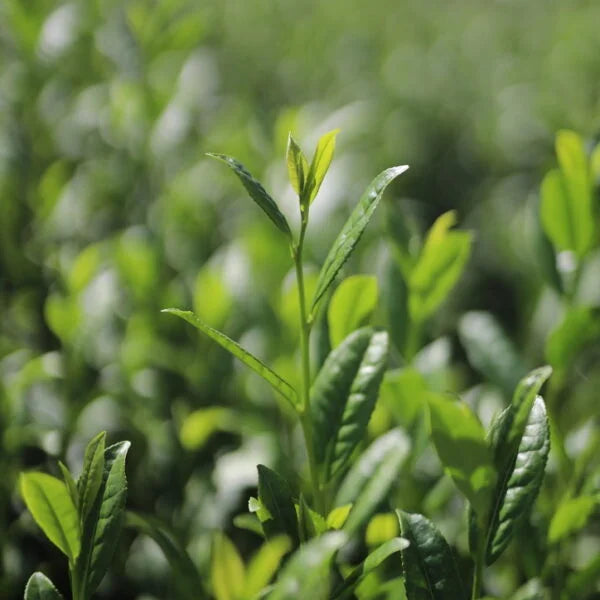
Matcha and antioxidants: Why EGCG is so powerful
Reading time: approx. 7 minutes | Last updated: June 2026
Matcha contains up to 137 times more EGCG than regular green tea, because with matcha you consume the entire ground leaf instead of just the infusion. EGCG is the most powerful catechin in green tea and acts as a direct free radical scavenger, anti-inflammatory agent, and cell-protective agent. This makes matcha unique among antioxidant-rich foods.
The highest EGCG concentration per cup? Order the 30-gram introductory pack from Unmatched Matcha. First harvest from Kagoshima, free shipping from €50.
Antioxidants protect body cells against oxidative stress, caused by free radicals. Free radicals are unstable molecules that damage cell membranes, proteins, and DNA, contributing to aging, cardiovascular disease, and cancer. The Netherlands Nutrition Centre (Voedingscentrum) emphasizes the importance of an antioxidant-rich diet as part of a healthy eating pattern. In this respect, matcha is one of the richest sources available.
Definition: Antioxidants are molecules that neutralize free radicals by donating an electron. EGCG (epigallocatechin gallate) is the dominant catechin in matcha and possesses exceptionally high antioxidant capacity thanks to its four hydroxyl groups that can directly scavenge free radicals.
Why Does Matcha Have More Antioxidants than Green Tea?
Quick answer: With green tea, 80-90% of the catechins remain in the leaf you discard after steeping. With matcha, you consume the entire ground leaf, allowing you to ingest all the catechins. That gives matcha up to 137x more EGCG per serving than a cup of steeped green tea.
This is the fundamental difference that sets matcha apart from other tea varieties. When you brew green tea, only a fraction of the polyphenols diffuse from the leaf into the water. The rest remains in the used tea leaves. With matcha, the leaf is first steamed, dried, and stone-ground into an ultrafine powder. You dissolve that powder completely in water and drink it. You consume the leaf in its entirety.
The shading for at least 20 days before the harvest further strengthens this effect. Without direct sunlight, the tea plant produces more L-theanine and chlorophyll, but also more catechins as a defense mechanism. Consequently, ceremonial matcha from Kagoshima has a higher EGCG content than shade-grown matcha of lower quality. Learn more about this difference in our article on Kagoshima vs Uji matcha.
What Does Science Say?
Quick answer: Three scientific studies support the exceptional antioxidant capacity of matcha: a 2023 Springer review measures EGCG levels in ceremonial matcha, a 2023 PMC review confirms the superiority of matcha over other tea forms, and a 2025 Springer study compares culinary vs ceremonial matcha for antioxidant capacity.
Study 1: EGCG as the dominant catechin in ceremonial matcha (Springer Nature, 2023)
A study published in Plant Foods for Human Nutrition (Springer Nature, 2023) analyzed 15 commercially available green tea and matcha products for catechin composition and antioxidant capacity. Findings: EGCG was the most prevalent catechin in all matcha products. Ceremonial matcha averaged 56.35 mg of EGCG per gram of powder. The CUPRAC antioxidant capacity correlated significantly with flavonoid content (R = 0.692, p < 0.001) and moderately with EGCG concentration (R = 0.368, p = 0.045).
Study 2: Matcha superior to other tea forms in catechin content (PMC9792400, 2023)
A comprehensive review published in PMC (PMC9792400, 2023) confirmed that matcha, as a powdered form of green tea, contains higher concentrations of catechins and residues than the traditional steeped leaf form. The authors determined that matcha likely functions differently than loose-leaf green tea due to the higher catechin concentrations and the presence of residues that are lost during steeping.
Study 3: Comparison of ceremonial vs culinary matcha for antioxidant capacity (Springer, 2025)
A study published in the Journal of Food Measurement and Characterization (Springer, 2025) compared the antioxidant capacity of ceremonial and culinary matcha. Findings: total phenolic content and flavonoid content correlated significantly with CUPRAC antioxidant capacity. Ceremonial matchas had the highest EGCG levels and antioxidant capacity per gram. The study confirmed that quality grade is directly related to antioxidant capacity.
|
Study |
Type |
Primary finding |
Relevance |
Source |
|
Springer 2023 |
Analytical |
EGCG dominates, 56.35 mg/g |
Ceremonial > culinary |
Plant Foods |
|
PMC9792400 |
Review |
Matcha > loose-leaf green tea |
Higher catechin content |
PMC |
|
Springer 2025 |
Comparative |
Ceremonial highest ORAC/CUPRAC |
Quality grade = antioxidant |
J.Food Meas. |
EGCG: The Most Powerful Antioxidant in Matcha
Quick answer: EGCG is 25-100x more powerful as an antioxidant than vitamin C or E, depending on the test system. It has four hydroxyl groups that can directly neutralize free radicals and works through both direct free radical scavenging and indirect activation of antioxidant enzymes.
How EGCG neutralizes free radicals
Free radicals are molecules with an unpaired electron. They are unstable and steal electrons from body cells, which causes oxidative damage. EGCG has four phenolic hydroxyl groups, each of which can donate an electron without becoming unstable itself. This makes EGCG an exceptionally efficient radical scavenger: one EGCG molecule can neutralize multiple free radicals.
Indirect antioxidant action: Nrf2 activation
In addition to direct radical scavenging, EGCG activates the Nrf2 signaling pathway, a transcription factor that stimulates the production of endogenous antioxidant enzymes such as superoxide dismutase (SOD), glutathione peroxidase, and catalase. This structurally strengthens the body's own antioxidant capacity at a cellular level.
Chelation of heavy metals
EGCG is also an effective chelator of heavy metals such as iron and copper. By binding free iron, it prevents the Fenton reaction, in which iron generates hydroxyl radicals, one of the most harmful types of free radicals. This partially explains the protective effects of EGCG on cells and tissues. Read more about the EGCG-iron mechanism in our article on matcha and skin health.
Matcha vs Other Antioxidant-Rich Foods
Quick answer: Matcha scores exceptionally high on ORAC value and EGCG content. Compared to blueberries, acai, or cocoa, matcha has a fundamentally different antioxidant spectrum: polyphenols (catechins) instead of anthocyanins or flavonols. Both are effective, but via different mechanisms.
|
Food |
Antioxidant type |
Dominant compound |
Specific effect |
|
Matcha (2g) |
Catechins |
EGCG (120-140 mg/cup) |
Anti-inflammatory, cell-protecti... |
|
Blueberries (100g) |
Anthocyanins |
Cyanidin, delphinidin |
Brain, vision, heart |
|
Acai (100g) |
Anthocyanins |
Cyanidin-3-glucoside |
High ORAC value |
|
Dark chocolate (30g) |
Flavonols |
Epicatechin, catechin |
Heart, mood |
|
Green tea (1 cup) |
Catechins |
EGCG (10-50 mg/cup) |
Same as matcha, lower |
|
Turmeric (1g) |
Curcuminoids |
Curcumin |
Anti-inflammatory, joints |
Why Ceremonial Matcha Provides the Most Antioxidants
Not all matcha is created equal when it comes to antioxidant content. The 2025 Springer study confirms what previous research suggested: quality grade correlates directly with antioxidant capacity. Ceremonial grade matcha has the highest EGCG levels and CUPRAC score.
Three factors determine the EGCG content in the final matcha:
-
Shading duration: at least 20 days provides significantly higher catechin concentrations
-
Harvest time: first harvest contains more L-theanine and catechins than later harvests
-
Grinding method: stone grinding preserves polyphenols better than industrial grinding due to lower heat production
Unmatched Matcha meets all three criteria: first harvest from Kagoshima, shaded for at least 20 days, stone-ground. This guarantees the highest EGCG concentration per cup. The effects of EGCG on skin, the immune system, and blood pressure are extensively documented in our articles on matcha and skin, matcha and the immune system, and matcha and blood pressure.
In Amsterdam, Rotterdam, Utrecht, The Hague, Haarlem, Almere, Zaandam, Hoofddorp, Purmerend, Laren, Soest, Venlo, and Alphen aan den Rijn, matcha is the fastest-growing choice for people who are consciously consuming antioxidant-rich foods as part of a healthy lifestyle.
Frequently Asked Questions about Matcha and Antioxidants
How many antioxidants are in matcha?
One cup of matcha (2 grams) contains 120-140 mg of EGCG and total catechins of 200-300 mg. That is up to 137x more EGCG than a cup of regular green tea, because with matcha you consume the entire ground leaf.
Why does matcha have more antioxidants than green tea?
With regular green tea, only 10-20% of the catechins diffuse into the water. The rest remains in the used leaf. With matcha, you consume the entire ground leaf and ingest 100% of the catechins.
What is EGCG and why is it so powerful?
EGCG (epigallocatechin gallate) is the dominant catechin in matcha. It has four phenolic hydroxyl groups that neutralize free radicals directly. Additionally, it activates the Nrf2 pathway, which stimulates the production of endogenous antioxidant enzymes.
Is matcha the best antioxidant source?
Matcha has an exceptionally high EGCG content, making it one of the richest sources of polyphenols. Other antioxidant-rich foods like blueberries, acai, and turmeric work through other compounds (anthocyanins, curcuminoids). A varied diet with multiple antioxidant sources is most effective.
Does the quality of matcha matter for antioxidant content?
Yes, significantly. Ceremonial first-flush matcha has the highest EGCG concentration, confirmed by 2025 Springer research. Culinary grade has less EGCG and lower antioxidant capacity. Investing in quality matcha truly pays off in terms of health effects.
Matcha is the richest consumable source of EGCG, the most powerful catechin in green tea. Three studies confirm the exceptional antioxidant capacity of ceremonial matcha. By consuming the entire leaf, you get up to 137x more EGCG than with regular green tea. Start with the 30-gram introductory pack from Unmatched Matcha. Ceremonial first harvest from Kagoshima, free shipping in the Netherlands and Belgium from €50.