How much caffeine is in matcha and what does it do to your energy levels
How much caffeine is in matcha and what does it do to your energy
Many people switch to matcha for the energy boost it provides. But how much caffeine is actually in matcha and how does it differ from coffee?
To properly understand this, it's important to first know what exactly matcha is and why it's so healthy. The way matcha is made determines how the caffeine works in your body.
Additionally, quality plays a significant role. Anyone who delves into buying matcha will quickly see that not all matcha has the same effect.
In this article, you'll discover how much caffeine is in matcha and why its effect feels completely different from coffee.
How much caffeine is in matcha
An average serving of matcha, 1 to 2 grams, contains approximately 30 to 70 mg of caffeine.
- Matcha: 30 to 70 mg caffeine
- Coffee: 80 to 120 mg caffeine
On paper, coffee seems stronger. Yet, many people experience matcha as more powerful and stable.
Why matcha works differently than coffee
The difference lies not only in the amount of caffeine but primarily in how it is absorbed.
In coffee, caffeine is readily available. This leads to a quick peak and often a quick crash.
In matcha, caffeine is bound to antioxidants such as catechins. As a result, it is absorbed more slowly.
- gradual energy
- no peaks and crashes
- longer focus
The role of L-theanine
Matcha naturally contains L-theanine. This amino acid promotes a calm and focused feeling.
While coffee often makes you restless, matcha provides:
- calm alertness
- improved concentration
- reduced stress
This combination of caffeine and L-theanine is unique to matcha.
How long does the energy from matcha last
The energy from matcha lasts an average of 4 to 6 hours.
This is because the caffeine is gradually released into your body. So you don't experience a sharp peak, but a stable energy level.
This makes matcha ideal for:
- working
- studying
- exercising
Do you get a crash from matcha
Unlike coffee, most people do not experience a crash after matcha.
This is due to the combination of:
- slow caffeine release
- presence of L-theanine
Your energy gradually declines instead of suddenly dropping.
Is matcha stronger than coffee
Not in terms of caffeine. But often in terms of effect.
Many people experience matcha as:
- more stable
- more sustained
- better for focus
So it's not about how much caffeine you consume, but how your body reacts to it.
Why quality makes a difference
Not all matcha contains the same amount of caffeine and L-theanine.
Cheap matcha:
- fewer nutrients
- more bitterness
- less effect
High-quality ceremonial matcha:
- more L-theanine
- better energy
- smoother taste
That's why the right choice when buying matcha makes a big difference in how you feel.
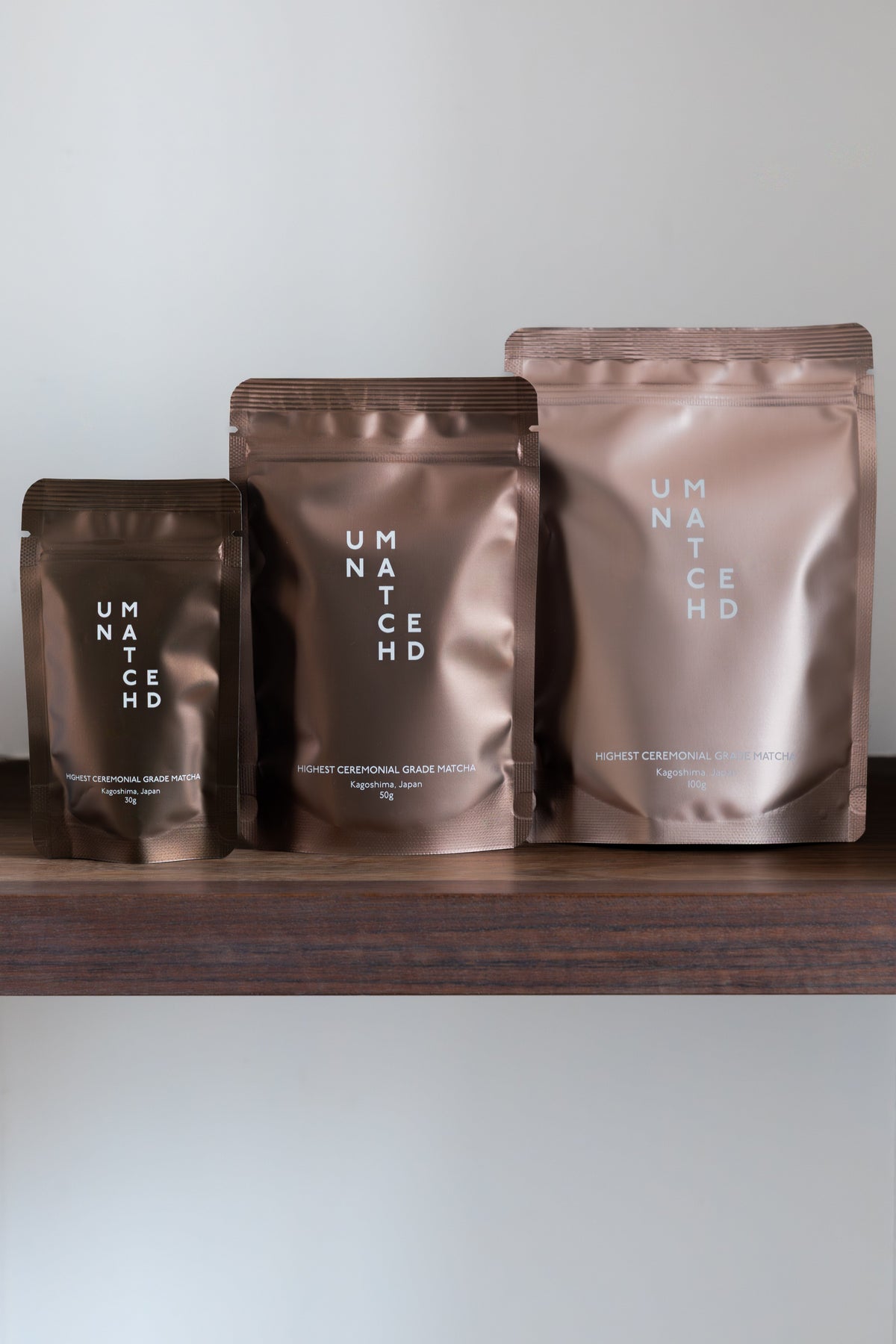
Why we choose Kagoshima matcha
Our matcha from Kagoshima is selected for taste, quality, and effect.
The combination of soil, climate, and cultivation results in a high content of L-theanine and a smooth taste.
That means:
- stable energy
- no crash
- easy to drink daily
Ready to experience the difference
The best way to understand the effect of matcha is to experience it yourself.
Conclusion
Matcha contains less caffeine than coffee, but works differently in your body. Due to its slow release and the presence of L-theanine, matcha provides stable energy and better focus.
The quality of your matcha determines how strongly you experience this effect. Therefore, always choose high-quality ceremonial matcha.