The history of matcha and the Japanese tea ceremony
14-08-2026 · 5 min read
Reading time: 8 minutes - Last updated: August 2026
Matcha did not originate in Japan, but in China during the Tang Dynasty (618-907), as ground green tea that helped Zen Buddhist monks stay awake during long meditation sessions. It was only centuries later, via monks traveling between China and Japan, that matcha grew into the heart of the Japanese tea ceremony as we know it today.
Taste a piece of this tradition: start with the 30-gram introductory pack of ceremonial matcha from Kagoshima. Free shipping on orders over €50.
The origins in China
Matcha finds its origins in China during the Tang Dynasty, where Zen Buddhist monks drank ground tea leaves to remain alert during meditation.
During the Tang Dynasty, the Chinese scholar Lu Yu wrote the Cha Jing, or The Classic of Tea, a detailed work on the cultivation, preparation, and serving of tea. Lu Yu was strongly influenced by Zen Buddhism, and that is no coincidence: in Chinese Zen monasteries, ground tea leaves were drunk as an aid to stay awake and alert during long meditation sessions. This early form of ground green tea is the direct predecessor of what we now call matcha (Wereldmuseum Leiden, https://leiden.wereldmuseum.nl/nl/wereldverhalen/time-tea).
The journey to Japan
Buddhist monks brought ground tea with them from their study trips to China to Japan. In 1191, the monk Eisai brought not only tea seeds but also Zen Buddhism itself.
The earliest written source about tea in Japan dates from around the ninth century, when the monk Eichu served green tea to Emperor Saga after a study trip to China. However, it was the monk Myoan Eisai (1141-1215) who laid the foundation for what would become matcha. After staying in a Chinese monastery for four years, Eisai returned to Japan in 1191, where he not only planted tea seeds near Nagasaki and Kyoto but also introduced Zen Buddhism in the form of the Rinzai school.
In 1211, Eisai wrote the Kissa Yojoki, or "Drinking Tea for Health," in which he described matcha as a miracle cure and the magic key to a long life. He dedicated the book to shogun Minamoto no Sanetomo in an attempt to convince him of the beneficial effects of powdered tea (Historiek.net, 2025, https://historiek.net/matcha-thee-geschiedenis/178987/).
From medicine to ceremony
The Buddhist monk Murata Juko (1422-1502) established the first rules for the tea ceremony, which developed into a refined art form in the centuries that followed.
In the centuries after Eisai, matcha grew from a medicinal drink into a ritual in its own right. The monk Murata Juko, also known as Shuko, was the first to establish rules for the preparation and drinking of matcha in a ceremonial setting. Tea master Takeno Joo (1502-1555) built upon this, before the tea ceremony received its final form under the most famous tea master in Japanese history.
Sen no Rikyu and the perfection of the tea ceremony
Sen no Rikyu (1522-1591) elevated the tea ceremony into a full-fledged Zen ritual, linked to the aesthetics of wabi-sabi and four core principles: harmony, respect, purity, and tranquility.
Sen no Rikyu is widely considered the tea master who elevated chanoyu, literally "hot water for tea," into a true art form. He linked the tea ceremony to the aesthetics of wabi-sabi—the appreciation for simplicity and impermanent beauty—and formulated four principles that remain the core of the Japanese tea ceremony to this day: wa (harmony), kei (respect), sei (purity), and jaku (tranquility) (Historiek.net, 2025, https://historiek.net/matcha-thee-geschiedenis/178987/).
Under Rikyu, every detail of the ceremony was considered: from the austere teahouse (chashitsu) to the simple, handmade bowls (chawan) and the precise, disciplined actions of the host. Nothing was accidental; everything served the spiritual harmony between host and guests.
What the traditional tea ceremony looks like
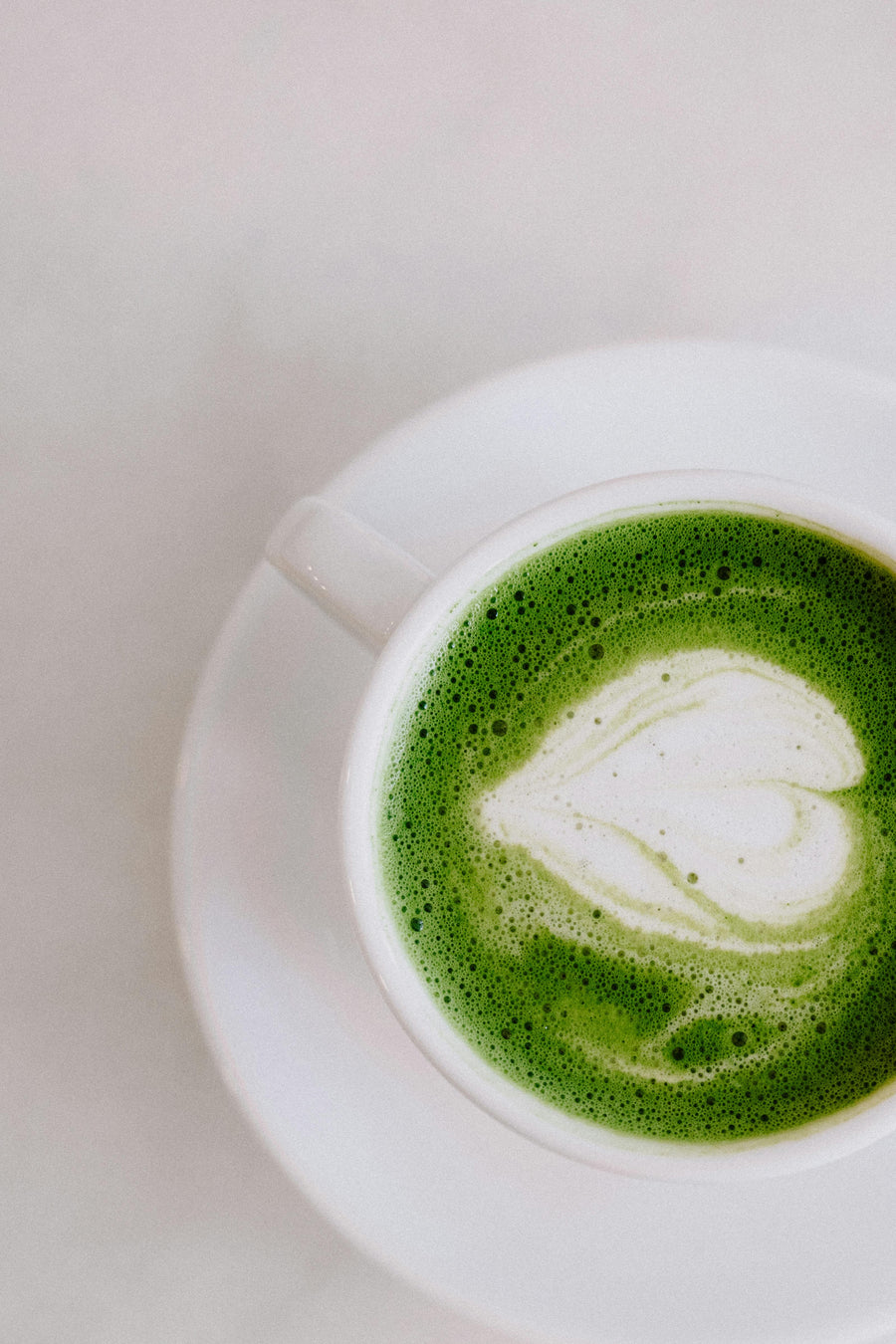
Traditionally, chanoyu takes place in an austere teahouse, where the host whisks the matcha with a chasen to create a light, creamy layer of foam.
A traditional Japanese tea ceremony takes place in a chashitsu, a small, austerely furnished teahouse, often located in a garden that is itself carefully designed to mark the transition from the outside world to the peace of the ceremony. The host prepares the matcha with a chasen, the bamboo whisk that is still used today, and serves it in a chawan, a handmade tea bowl. Would you like to experience for yourself why this tool has remained the standard for centuries? Read why you prepare matcha with a chasen.
From ceremony to global trend
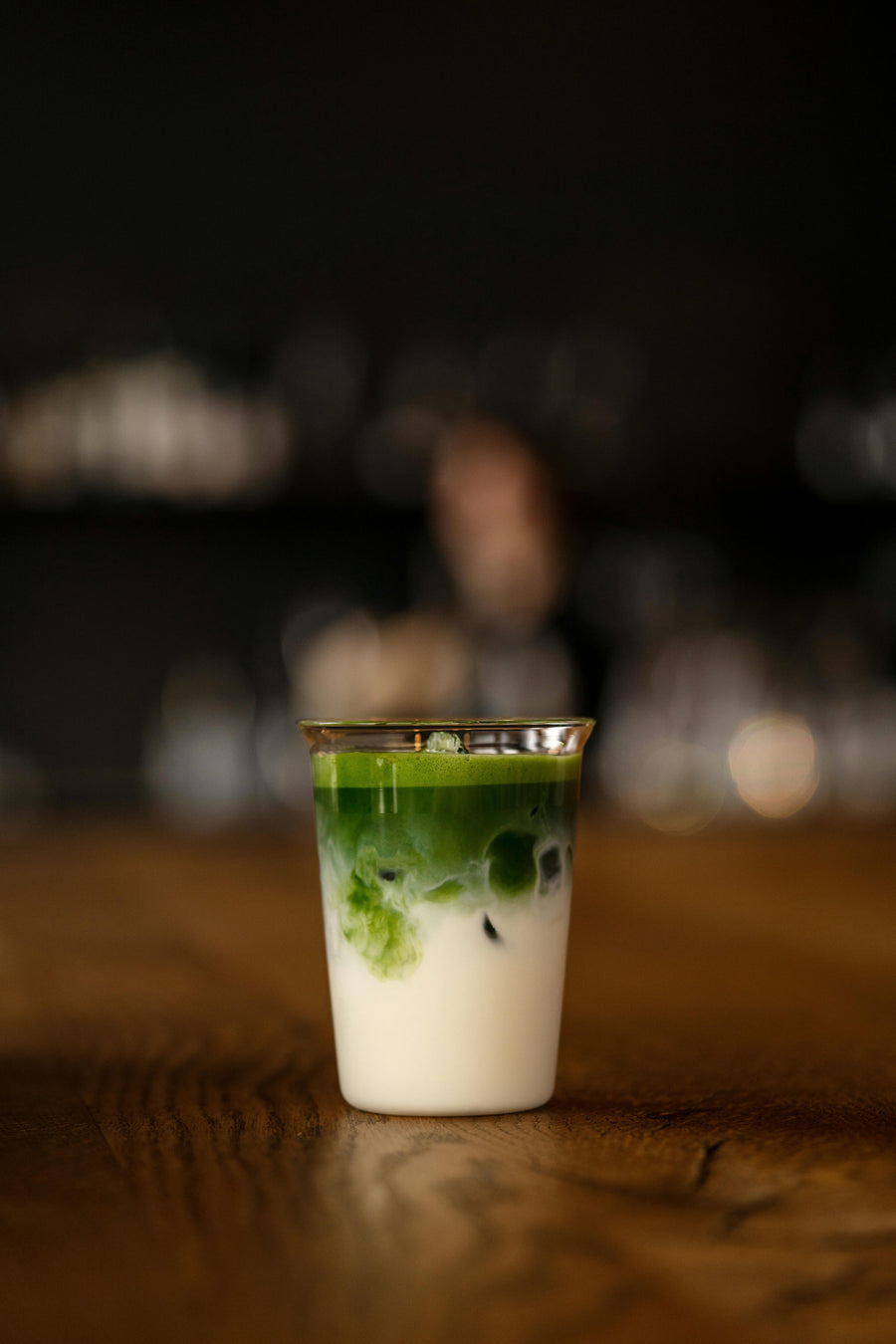
What was once a strictly regulated Zen ritual is now a globally appreciated drink, from traditional tea ceremonies to iced lattes on café terraces.
The essence of what makes matcha special has not changed in all those centuries: ceremonial matcha from the first harvest, carefully picked and stone-ground, just as the monks and tea masters did centuries ago. Unmatched Matcha comes from a family farm in Kagoshima and follows those same principles: first harvest, stone-ground, without additives. You can read more about the full story behind matcha and its rise in the Netherlands in what is matcha: origins, rise in the Netherlands, and benefits, and the difference between ceremonial and culinary grade in ceremonial versus culinary matcha.
Experience the tradition yourself: view the ceremonial matcha collection and get started with the 30-gram pack.
Frequently Asked Questions
Where did matcha originally come from?
Matcha finds its origins in China, during the Tang Dynasty (618-907), where ground tea leaves were drunk by Zen Buddhist monks during meditation.
Who brought matcha to Japan?
The monk Myoan Eisai brought tea seeds and knowledge of powdered tea from China to Japan in 1191, along with Zen Buddhism. In 1211, he wrote the famous book Kissa Yojoki about tea and health.
What is chanoyu?
Chanoyu, also known as chado or sado, is the Japanese tea ceremony, literally "the way of the tea." It is an ancient ritual in which a host prepares and serves matcha according to set, meaningful actions.
Who was Sen no Rikyu?
Sen no Rikyu (1522-1591) was the most famous Japanese tea master, who elevated the tea ceremony into an art form and linked it to the aesthetics of wabi-sabi and the four principles of harmony, respect, purity, and tranquility.
Why was matcha first used as medicine?
The earliest Japanese text on matcha, Eisai's Kissa Yojoki, described matcha as a health miracle, written from the Chinese tradition in which ground tea was drunk as a medicinal and clarifying agent.
From an aid for meditating monks in Chinese monasteries to a carefully perfected Zen ritual in Japan, and finally a globally appreciated drink: the history of matcha is one of centuries of refinement. Every cup of ceremonial matcha you drink today still carries a piece of that tradition.
Start today: order the 30-gram introductory pack of ceremonial matcha from Kagoshima. Free shipping on orders over €50, delivered tomorrow.