Matcha water temperature: Why it makes a difference
12-05-2026 · 9 min read
Matcha Water Temperature: Why It Makes the Difference
Reading time: ±6 minutes | Last updated: May 2026
The ideal water temperature for matcha is 70 to 80 °C (158 to 176 °F). That is well below the boiling point (100 °C / 212 °F) and there is a good reason for it: water that is too hot excessively extracts catechins and tannins from the matcha powder, resulting in a bitter, sharp taste. At 70 to 80 °C, the umami amino acids (L-theanine) are optimally released while bitterness remains minimal.
Water temperature is the number one reason why home-prepared matcha tastes bitter. Not the quality of the powder, not the amount, but the water. In this article, we explain what happens at a molecular level, which temperature suits which preparation, and how to reach the right temperature without expensive equipment.
What happens at different temperatures
Quick answer: At 70 to 80 °C, the amino acids (umami, sweetness) are optimally released while the catechins (bitterness) remain limited. At 90 to 100 °C, the catechins and tannins are over-extracted, which causes bitterness.
Matcha contains two groups of flavor compounds that are released at different temperatures:
Amino acids (L-theanine, glutamate): these are responsible for the umami taste, the subtle sweetness, and the creamy mouthfeel of matcha. They dissolve at relatively low temperatures (50 to 70 °C). In ceremonial matcha, the L-theanine content is particularly high thanks to the shading process (Keenan et al., Journal of Medicinal Food, 2011).
Catechins (EGCG, tannins): these are responsible for the bitterness and astringency (the drying sensation). They only dissolve well at higher temperatures (80 to 100 °C). The hotter the water, the more catechins are released, and the more bitter the matcha tastes.
The art is to maximally extract the amino acids (umami) while limiting catechin extraction (bitterness). You achieve that at 70 to 80 °C. It is a balance, not a random guideline.
The temperature guide: what happens at each level
Quick answer: 60 °C is too low (watery). 70 to 80 °C is ideal (umami-rich, smooth). 85 to 90 °C is acceptable for culinary (more bitterness). 95 to 100 °C is too hot (bitter, sharp).
|
Temperature |
Taste |
What happens |
Suitable for |
|
50 to 60 °C |
Watery, bland |
Insufficient extraction of all compounds |
None (too cold) |
|
65 to 70 °C |
Very smooth, sweet |
Maximum amino acid extraction, minimal catechins |
Competition grade, koicha |
|
70 to 75 °C |
Umami-rich, smooth |
Optimal balance of amino acids vs catechins |
Ceremonial matcha (ideal) |
|
75 to 80 °C |
Full-bodied, slightly grassy |
Slightly more catechins, still balanced |
Ceremonial matcha, latte |
|
80 to 85 °C |
Catechin extraction increases |
Culinary matcha |
|
|
85 to 90 °C |
Bitter, astringent |
Excessive catechin extraction |
Baking/cooking only |
|
95 to 100 °C |
Sharply bitter |
Tannins and catechins dominate |
Avoid for all matcha |
Note that the difference between 70 °C and 85 °C is enormous in terms of taste, while the difference in degrees seems relatively small. Those 15 degrees determine whether your matcha is a pleasure or a disappointment.
The ideal temperature per preparation
Quick answer: Pure (usucha): 70 to 75 °C. Latte: 75 to 80 °C (slightly hotter because milk softens the taste). Iced: 70 to 75 °C (matcha shot, then over ice). Koicha (thick): 65 to 70 °C.
|
Preparation |
Temperature |
Why |
|
Usucha (pure, thin) |
70 to 75 °C |
Pure, you taste every nuance, so minimal bitterness is crucial |
|
Matcha latte (warm) |
75 to 80 °C |
Milk mutes bitterness, slightly hotter water provides more flavor intensity |
|
Iced matcha latte |
70 to 75 °C |
Make a concentrated matcha shot first, pour over ice |
|
Koicha (thick, ceremonial) |
65 to 70 °C |
Higher matcha-to-water ratio, so even lower temp to avoid bitterness |
|
Matcha smoothie |
N/A |
No hot water needed, blend matcha directly with cold liquid |
Want to know more about the full preparation? Read how to make matcha: step-by-step for the perfect preparation.
How to measure water temperature (with and without a thermometer)
Quick answer: With a temperature-controlled kettle (most reliable), with a kitchen thermometer, or with the rule of thumb: boil water and let it cool for 3 to 5 minutes.
Method 1: Kettle with temperature control
The easiest and most reliable method. Set the kettle to 75 °C and you have the perfect temperature every time. Kettles with temperature control are available from approx. €25 to €50 at stores like Blokker, MediaMarkt, and Bol.com. It is an investment that pays for itself in better-tasting matcha.
Method 2: Kitchen thermometer
Boil water, pour it into a cup, and measure the temperature with a kitchen thermometer (or a meat thermometer). Wait until the temperature drops to 70 to 80 °C and then pour it over the matcha.
Method 3: The cooling method (without equipment)
No thermometer or special kettle? Use the rule of thumb:
Step 1: Boil water to the boiling point (100 °C).
Step 2: Turn off the kettle and open the lid.
Step 3: Wait 3 to 5 minutes. In a standard kettle, the temperature drops to approx. 75 to 80 °C during that time.
Alternative: pour the boiling water into a second cup or pitcher first. With every transfer, the temperature drops by about 10 °C. Pouring twice (kettle to cup, cup to chawan) brings you from 100 °C to approx. 80 °C.
This method is less precise than a thermometer, but more than sufficient for daily use. The difference between 73 °C and 78 °C is practically imperceptible in taste.
Why you should never use boiling water for matcha
Quick answer: Boiling water (100 °C) makes every matcha bitter, even ceremonial quality. It excessively extracts catechins and tannins, breaks down some of the L-theanine, and can destabilize EGCG.
This is the most common mistake in home preparation. Many people treat matcha like a tea bag: pour boiling water over it and you're done. But matcha is not a tea bag. It is an ultrafine powder of which you consume the entire leaf, not just an infusion. Everything in the powder ends up in your cup.
At 100 °C, three things happen that you don't want:
1. Excessive bitterness. The catechins (including EGCG) and tannins dissolve maximally, giving a sharp, unpleasant bitterness that completely overshadows the umami.
2. Breakdown of L-theanine. At very high temperatures, L-theanine begins to break down, resulting in less of the calming, focus-enhancing effect.
3. Loss of aroma. The delicate, grassy scent of matcha partially evaporates with boiling water. At 70 to 80 °C, the aroma remains intact.
The conclusion: even the very best ceremonial matcha tastes bitter if you use boiling water. The water temperature is more important than the price of your matcha.
More about what EGCG does? Read EGCG in matcha: the most powerful antioxidant explained.
Can you make matcha with cold water?
Quick answer: Yes. Matcha also dissolves in cold water, but it takes longer and the taste is different: softer, less intense, more refreshing. You make iced matcha by first making a concentrated shot with hot water and pouring it over ice.
Matcha in cold water is a popular summer preparation. The powder dissolves less quickly than in hot water, so you have to whisk or stir longer and more vigorously. The result is a softer, less intense drink with less bitterness (because cold extraction releases fewer catechins).
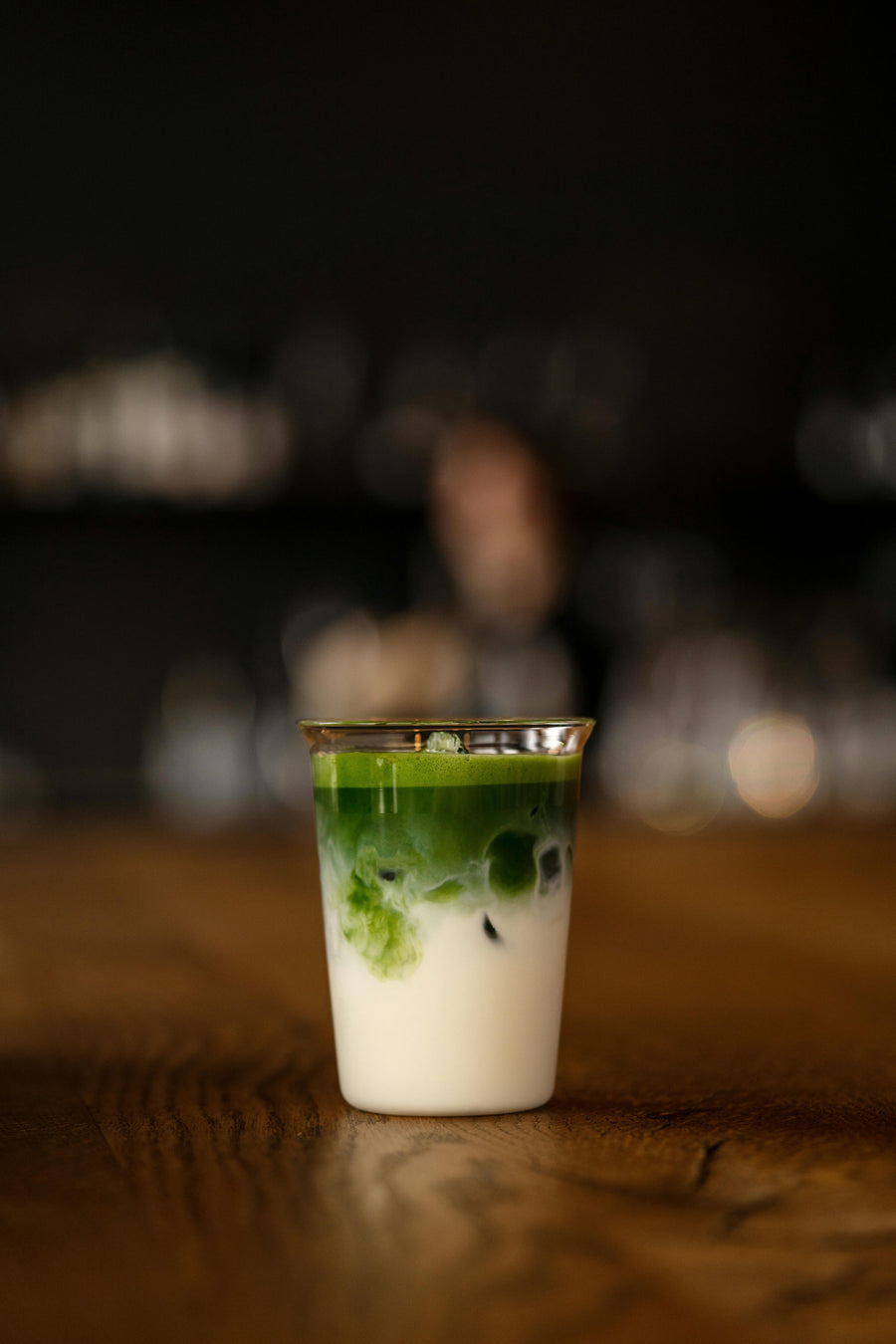
The best method for iced matcha: make a concentrated matcha shot first with 30 to 40 ml of hot water (70 to 75 °C), whisk until smooth, and then pour it over a glass full of ice cubes. This gives you the full flavor without the wateriness of matcha in cold water.
The full iced matcha recipe? Read how to make the perfect iced matcha latte.
3 common mistakes with water temperature
Quick answer: The three mistakes: using boiling water (makes every matcha bitter), pouring water too quickly over the matcha (uneven extraction), and not checking the temperature after boiling (water cools quickly in a cold cup).
Mistake 1: Boiling water directly from the kettle. The number one mistake. Always let the water cool down first or use a kettle with a temperature setting.
Mistake 2: Pouring water too quickly. If you pour the water all at once over the matcha, the powder can extract unevenly (some parts too hot, others too cold). Pour slowly and start whisking immediately.
Mistake 3: Not accounting for cooling. Water at 75 °C cools down quickly to 65 °C in a cold chawan or cup. Warm your chawan first with a little hot water (pour it away) so that the matcha maintains the right temperature.
The kettle as a matcha investment
If you drink matcha daily, a temperature-controlled kettle is the best investment you can make besides good matcha. For €25 to €50, you have a device that gives you exactly the right temperature every morning, without thinking, without waiting, without a thermometer.
Whether you live in Amsterdam, Utrecht, Almere, Zaandam, Hoofddorp, or Laren: a good kettle and ceremonial matcha are all you need for the perfect cup. Order your matcha at Unmatched Matcha (delivered tomorrow), and the kettle at your favorite webshop.
More about what accessories you need? Read complete matcha set: this is what you need.
Frequently asked questions about matcha water temperature
What water temperature do you use for matcha?
The ideal water temperature for matcha is 70 to 80 °C. For pure drinking (usucha), 70 to 75 °C is optimal. For a matcha latte, you can go slightly hotter (75 to 80 °C) because the milk mutes the bitterness. Never use boiling water (100 °C).
Why does boiling water make matcha bitter?
Boiling water excessively extracts catechins and tannins from the matcha powder, which causes sharp bitterness. At 70 to 80 °C, the amino acids (umami, sweetness) are optimally released while bitterness remains minimal. Water temperature is the number one reason for bitter matcha.
Can you make matcha with cold water?
Yes. Matcha also dissolves in cold water, but more slowly and with a softer flavor profile. The best method for cold matcha: make a concentrated shot first with 30 to 40 ml of hot water (70 to 75 °C), whisk until smooth, and pour over ice.
How do you measure water temperature without a thermometer?
Boil water and let it cool for 3 to 5 minutes with the lid open. During that time, the temperature drops to about 75 to 80 °C. Alternative: pour boiling water twice into another cup. With each transfer, the temperature drops by about 10 °C.
What is the difference between 70 and 80 degrees for matcha?
At 70 °C, the matcha is smoother, sweeter, and less intense. At 80 °C, the taste is fuller and slightly grassier, with a hint more bitterness. Both are excellent for ceremonial matcha. The difference is subtle and comes down to personal preference.
15 degrees of difference, a world of taste
Water temperature is the most underestimated element of matcha preparation. The difference between 75 °C and 90 °C is the difference between smooth umami and sharp bitterness. It costs you nothing extra to get the temperature right. Just a little patience to let the water cool down, or a kettle that does it for you.
If you thought matcha was bitter until now: try it again. The same matcha, but now with water at 70 to 75 °C. You will likely taste a completely different drink. That is the difference temperature makes.
Order ceremonial matcha at Unmatched Matcha and experience the difference that the right temperature makes. Free shipping in the Netherlands from €50.