Matcha for your hospitality business: why quality affects your revenue
21-08-2026 · 5 min read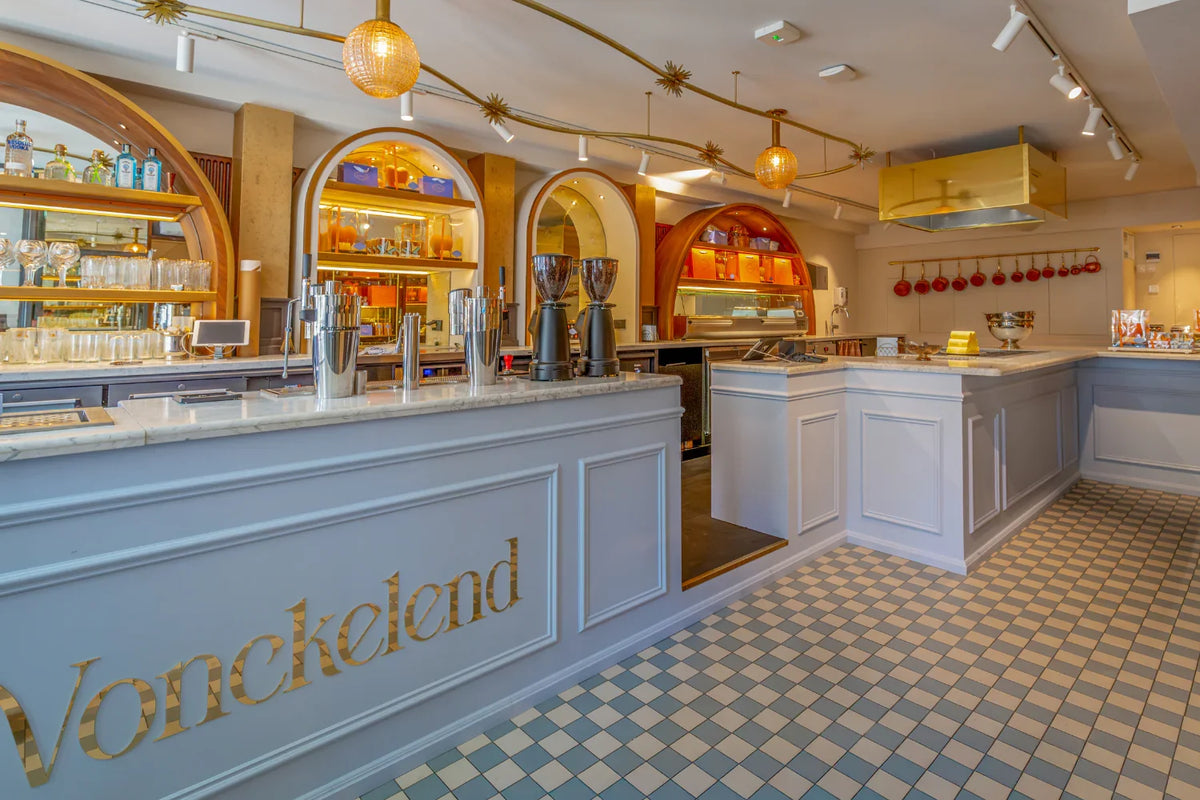
Reading time: 7 minutes - Last updated: August 2026
The matcha you purchase is one of the smallest cost items on your menu, yet one of the biggest factors in whether guests return. Many hospitality businesses choose culinary grade over ceremonial when scaling up their matcha offering, purely to reduce costs. That is an understandable reflex, but economically, it is often the wrong choice.
Want to get acquainted? View our business page for delivery times, volumes, and personal contact.
Why so many hospitality businesses choose cheap matcha
The demand for matcha grew so rapidly in recent years that planting could not keep pace, leading to a lot of matcha of varying quality in circulation.
The success of matcha in the hospitality industry was so explosive that demand overtook planting: Japanese tea farmers could not replant tea bushes fast enough. The result is that there is currently a lot of lower-quality matcha in circulation (Entree Magazine, 2025, https://www.entreemagazine.nl/dranken/gijsbregt-brouwer-matcha-wordt-nog-groter-in-2026). For hospitality businesses that wanted to move quickly with the trend, culinary grade, being cheaper and easier to obtain, was often the practical choice. Understandable in the short term, but it has a price that doesn't appear on the purchase invoice.
The margin calculation most businesses skip
Drinks in the hospitality industry have an average gross margin of around 85%. Consequently, the matcha itself is a fraction of what a guest pays, while the perceived quality determines whether that guest returns for a second visit.
A healthy gross margin on drinks in the hospitality industry is around 85%, compared to 70 to 75% on solid food items (TheFork Manager, https://www.theforkmanager.com/nl/blog/restaurant-management/margepercentage-gemiddelde-winstmarge-horeca). With a matcha latte costing €5 to €6 on the menu, the matcha itself is therefore a relatively small cost item. The difference between ceremonial and culinary matcha per portion is usually a few cents, not euros. What those few cents do determine is whether the guest gets a creamy, umami-rich latte or a bitter, flat version, and whether that same guest returns in two weeks or goes to the business down the street.
In other words: you are saving on the only part of the experience that the guest actually tastes, while the saving itself barely registers in your total margin. That is economically inefficient, even if the intention (cutting costs) was completely logical.
Why 'ceremonial' on the label doesn't provide enough certainty
Ceremonial is not a protected term. Any supplier can sell lower quality as ceremonial, including culinary grade powder of non-Japanese origin.
This is precisely why buying by name alone is not enough: 'ceremonial' is not a protected term, so any supplier can use it, regardless of origin or grinding method. A yellow or dull green latte, or a bitter taste, are the clearest signals that there is something wrong with the quality you are serving, regardless of what the label says. You can read more about how to recognize this in the 2026 matcha shortage and how to spot fakes, and the full set of criteria in the complete buying guide for the best matcha.
What consistency is worth for your menu
Single origin matcha from a fixed farm and harvest means that taste, color, and quality remain the same from delivery to delivery—crucial for a menu item that guests order repeatedly.
Consistency is everything in the hospitality industry. A guest who drinks a creamy, bright green matcha latte today and gets a duller, more bitter version in two weeks notices it, even if they can't put their finger on exactly why. Matcha from varying harvests or mixed origins simply yields varying results. Unmatched Matcha comes from a single family farm in Kagoshima, which means that taste, color, and quality remain stable from delivery to delivery: no harvest blends, no quality fluctuations.
What a visibly better matcha does for your menu
Origin and quality can be communicated to guests as a distinguishing factor—something an anonymous tub from a supplier does not contribute to.
Beyond taste and consistency, a demonstrably higher-quality product also provides communicative value. Single origin, first harvest, Kagoshima: these are concrete, credible facts that you can share on your menu or with your guests, unlike a generic 'ceremonial' label without further substantiation. For a growing number of guests, especially the group consciously switching from coffee to matcha because of the calmer energy without the crash, that transparency is exactly what they look for.
Already more than a café that made the switch: Unmatched Matcha is served at locations such as Vonckelend in Amsterdam and is used by partners like Squash and Wellness Bussum and Bakkerij Voncken (23+ locations in South Limburg).
What Unmatched Matcha means for your business
First harvest ichibancha from Kagoshima, shaded for at least 20 days, stone-ground, and airtight-packed. No second harvest, no blends, no alternative origins.
We exclusively supply first harvest ichibancha from Kagoshima, Japan, shaded for at least 20 days and stone-ground. No second harvest, no blends, no Chinese origin. Single origin, transparent, and consistent—that is the only standard we supply to coffee bars, restaurants, hotels, wellness studios, and companies throughout the Netherlands and Belgium.
Before we even started selling, this matcha was tested for nearly a year at Vonckelend, the physical tea shop on the Rokin in Amsterdam. Not as a marketing claim, but as an actual hospitality trial: would this stand up to daily, repeated use in a real business? We wanted to be sure of that before recommending it to other entrepreneurs.
Ready to taste the difference? Get in touch via our business page for samples, volume pricing, and custom delivery times.
Frequently asked questions from hospitality buyers
Is ceremonial matcha too expensive to serve profitably?
No. Drinks in the hospitality industry have an average gross margin of around 85%. The difference between ceremonial and culinary matcha per portion is usually a few cents, while it directly affects taste and repeat purchases.
Do you supply to hospitality and businesses?
Yes. We supply to coffee bars, restaurants, hotels, wellness studios, and companies throughout the Netherlands and Belgium. Get in touch via our business page for volumes and delivery times.
What is the difference between your matcha and what most hospitality businesses use now?
Many hospitality businesses use culinary grade to cut costs. We supply exclusively ceremonial grade from the first harvest, single origin from Kagoshima, stone-ground and without additives.
Can I taste a sample before I switch?
Get in touch via our business page to discuss the options for samples.
Quality in matcha is not an aesthetic choice; it is a revenue choice. With a margin of around 85% on drinks, the matcha itself barely determines your profit, but it does determine whether guests return. Single origin, first harvest, Kagoshima: that is the difference that guests taste, even if they don't have the words for it.
Let's get acquainted: visit our business page or contact us directly for a custom proposal.