Matcha in the supermarket: What are you actually buying?
21-05-2026 · 6 min read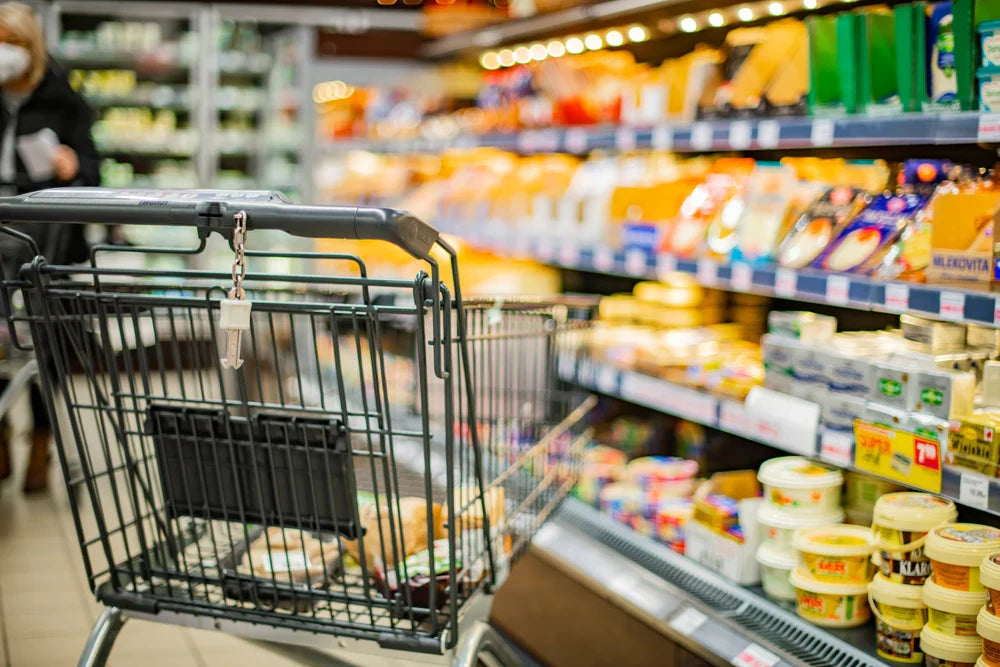
Matcha in the Supermarket: What Are You Actually Buying?
Reading time: approx. 7 minutes | Last updated: May 2026
Buying matcha at Albert Heijn or Jumbo is temptingly convenient, but what you find on the shelves is almost always culinary grade powder: intended for baking or mixing, not for drinking pure. You won’t find high-quality ceremonial matcha in the supermarket, and there are concrete reasons for this.
The popularity of matcha in the Netherlands is growing rapidly. More and more people in Amsterdam, Rotterdam, Utrecht, The Hague, Almere, and Zaandam are looking for matcha, but they don't always know what they are buying. This article explains the difference honestly, so you can make an informed choice. Also, read our overview of the proven health benefits of matcha, because quality makes a direct difference there.
Definition: Ceremonial matcha is first-harvest, shade-grown, and stone-ground tea. Culinary grade matcha is of lower quality, intended for baking and blending. The difference lies in taste, color, EGCG content, and preparation method.
What Do You Find in the Supermarket?
Quick answer: Supermarkets like Albert Heijn and Jumbo sell almost exclusively culinary grade matcha, often of unknown origin, with additives or sugar. Ceremonial grade is missing from the standard assortment.
A quick glance at the shelf at Albert Heijn or Jumbo usually yields one or two products: matcha tea bags, a small jar of matcha latte mix with added sugar, or a bag of matcha powder from a private label or B-brand. What you rarely see is the origin stated: which region, which harvest moment, which production process.
That lack of transparency is no coincidence. Supermarket matcha is sourced based on price, not quality. The purchase price determines the shelf space, and ceremonial grade from Kagoshima or Uji is simply too expensive for the margins supermarkets apply to a product retailing at 5 to 8 euros.
|
Criterion |
Supermarket |
Online B-brand |
Ceremonial specialist |
|
Quality grade |
Culinary |
Culinary to premium |
Ceremonial |
|
Origin stated |
Rarely |
Sometimes |
Always |
|
Additives |
Often (sugar, milk) |
Sometimes |
None |
|
EGCG content |
Low |
Moderate |
High |
|
Color |
Yellow-green to olive |
Medium green |
Bright green |
|
Taste |
Bitter, sharp |
Variable |
Smooth, umami |
|
Suitable for drinking pure |
No |
Limited |
Yes |
|
Price per 30g |
€4 to €8 |
€8 to €15 |
€15 to €25 |
|
Price per cup |
€0.30 to €0.55 |
€0.55 to €1.00 |
€0.80 to €1.30 |
Note: price per cup is calculated based on 2 grams per cup. With supermarket matcha, you often need 3 grams for the same intensity.
Why Quality Grade Matters So Much
Quick answer: Culinary grade matcha contains up to 3x less EGCG than ceremonial. It has more bitterness due to higher tannin concentration and lower L-theanine content. For health benefits, the channel you buy from makes a direct difference.
The color difference is a quality signal
Bright green matcha has more chlorophyll, more L-theanine, and more EGCG. The wealth of chlorophyll comes directly from the shading time: at least 20 days without direct sunlight before harvesting. This increases amino acid production in the leaf. Supermarket matcha skips this process or significantly limits it. Read more about how EGCG works and why it is so important.
Bitterness is not a taste preference, but a quality indicator
If matcha tastes bitter, it contains too many low-quality catechins and too little L-theanine to buffer them. With ceremonial matcha, L-theanine provides a smooth, umami-rich flavor that neutralizes the bitterness. People who think they don't like matcha have in many cases only tried supermarket or culinary grade.
This is also why we at Unmatched Matcha regularly hear: 'I thought I didn't like matcha, but this is completely different.' That experience has everything to do with quality grade and nothing to do with matcha as a flavor.
The Fair Price Comparison
Quick answer: Supermarket matcha seems cheaper, but you need more powder for the same taste intensity and get fewer active ingredients per gram. Per cup with effect, ceremonial matcha is often comparable or even cheaper.
|
Calculation |
Supermarket |
Online B-brand |
Unmatched Matcha |
|
Price per package |
€6 / 30g |
€12 / 30g |
€15 to €22 / 30g |
|
Grams needed per cup |
3g (more needed) |
2 to 3g |
2g |
|
Cups per package |
10 cups |
10 to 15 cups |
15 cups |
|
Price per cup |
€0.60 |
€0.80 to €1.20 |
€1.00 to €1.47 |
|
EGCG per cup |
Low |
Moderate |
High |
|
Value for money |
Low |
Moderate |
High |
See also our explanation of why matcha seems so expensive but isn't as bad per cup. The price per cup and the active substances per euro are the right metrics.
What You CAN Buy at the Supermarket
To be fair: for baking and cooking, culinary grade matcha is fine. If you make matcha cookies, matcha cake, or matcha granola, the flavor will be masked by other ingredients anyway. The subtle umami and freshness of ceremonial grade are lost at high temperatures. For baking purposes, you can use the supermarket variant or order the cheaper bulk option online.
But for your daily matcha latte, your morning ritual, or pure preparation with a chasen? Then supermarket matcha is simply not suitable. You are then drinking a beverage that tastes bitter, contains little L-theanine, and does not provide the stable energy that characterizes ceremonial matcha.
Buying Matcha in the Netherlands: Where and How
The best ceremonial matcha in the Netherlands can be ordered online from a specialist who is transparent about origin, harvest moment, and production process. Do you live in Amsterdam? You can also taste Unmatched Matcha at Vonckelend on Rokin 81 in the heart of the city.
From our webshop, we deliver quickly throughout the Netherlands and Belgium. Residents of Rotterdam, Utrecht, The Hague, Haarlem, Almere, Zaandam, Hoofddorp, Purmerend, Laren, Soest, Venlo, Alphen aan den Rijn, and the Schiphol area usually receive their order the next working day. Free shipping on orders over €50.
5 Signs You Are Buying Good Matcha
Quick answer: Transparency about origin, bright green color, no additives, stone-ground, and first harvest are the five characteristics that distinguish quality matcha from cheap alternatives.
|
# |
Signal |
What it says |
Check at supermarket? |
|
1 |
Origin stated |
Region + farmer visible |
Rarely |
|
2 |
Bright green color |
High chlorophyll and L-theanine |
No, often yellow-green |
|
3 |
No additives |
Pure powder, no sugar |
Often contains sugar or milk |
|
4 |
Stone-ground |
Finest particles, best solubility |
Rarely mentioned |
|
5 |
First harvest (Ichibancha) |
Most amino acids and EGCG |
Never mentioned |
Want to know more about recognizing quality? Read our article on recognizing matcha quality with 5 simple tests.
Frequently Asked Questions
Can I buy matcha at Albert Heijn?
Yes, Albert Heijn sells matcha. But it is culinary grade or matcha latte mix with additives. For pure ceremonial matcha to drink as is, you must rely on online specialists.
Is supermarket matcha unhealthy?
Not unhealthy, but less effective. Supermarket matcha contains less EGCG and L-theanine than ceremonial. If you want to utilize the health benefits of matcha, quality grade is decisive.
Why do I find matcha too bitter?
Bitterness is almost always a sign of low quality grade or incorrect preparation. Ceremonial matcha with 70 to 80-degree water tastes smooth and umami-rich, not bitter. Also, check our guide on water temperature.
What is the difference between matcha powder and matcha tea bags?
Tea bags do not contain finely ground powder but coarse pieces of dried leaf. You do not dissolve them in water. That is structurally different from matcha powder, which dissolves completely and releases all its active substances into your drink.
Where do I order the best matcha online?
From a specialist who is transparent about origin and quality grade. Unmatched Matcha supplies ceremonial matcha from Kagoshima, Japan. First harvest, shade-grown, stone-ground. No additives. Free shipping on orders over €50.
Buying matcha in the supermarket is possible, but you are buying something different from what makes matcha famous. For baking and cooking: fine. For your daily ritual, for energy without the crash, for the taste and the health benefits: choose ceremonial from a specialist. The price difference per cup is smaller than you think, the quality difference is enormous. Check out the assortment of Unmatched Matcha and discover what real matcha tastes like.