Recognizing Matcha Quality: 5 Tests for Home
24-04-2026 · 11 min read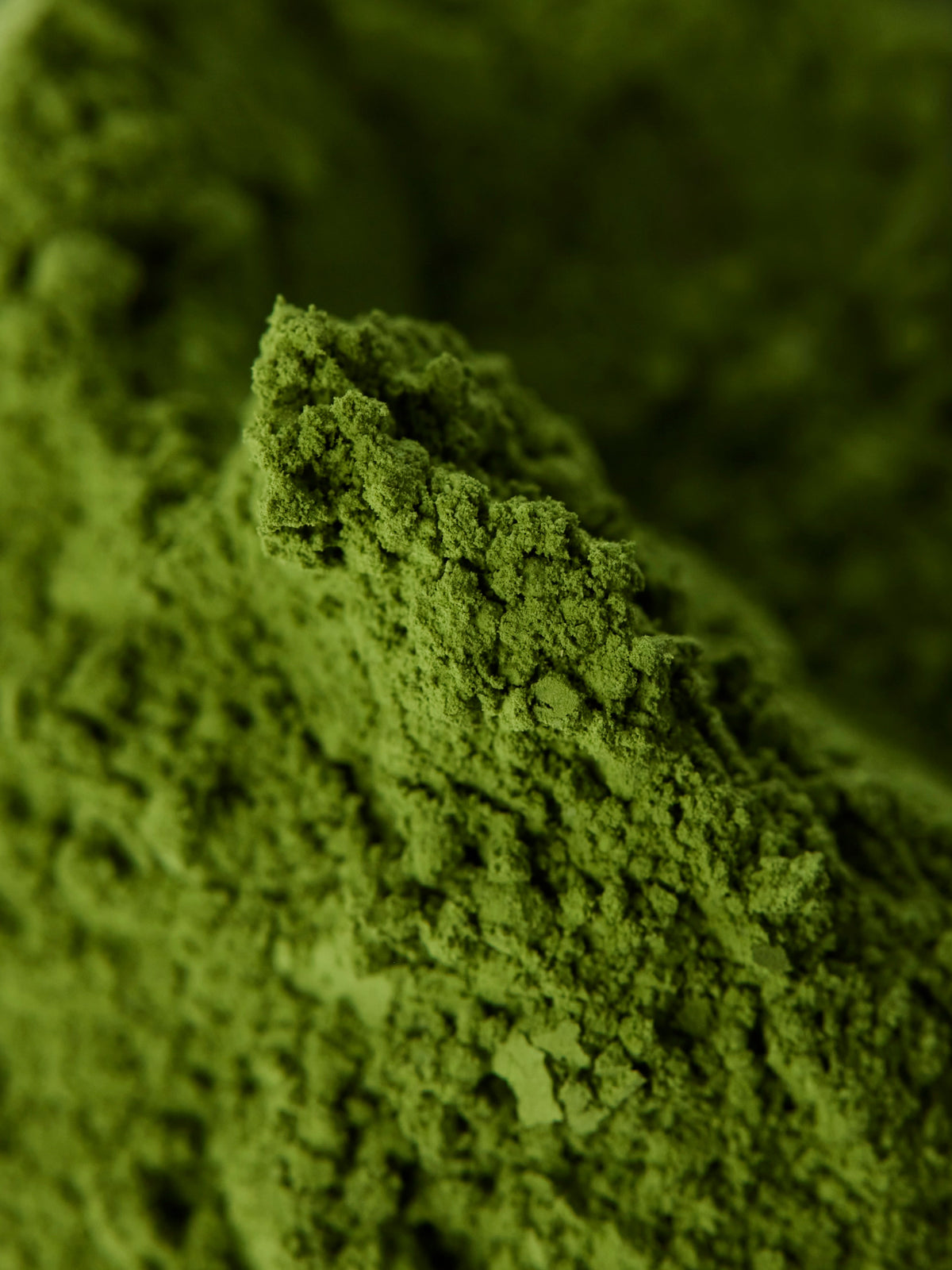
Recognizing Matcha Quality: 5 At-Home Tests
Reading time: ±7 minutes | Last updated: April 2026
Recognizing matcha quality is a skill every matcha drinker should have. The difference between ceremonial and low-quality matcha is vast: in taste, color, nutritional value, and even safety. Fortunately, with five simple tests, you can determine within two minutes at home whether your matcha matches the quality stated on the label. You don't need a laboratory for this, just your eyes, nose, fingers, and tongue.
Whether you buy matcha in a store in Amsterdam, order online, or received it as a gift: these tests always work. Do you want to understand the difference between the two main grades first? Read ceremonial vs culinary matcha: what is the difference and which one should you choose?.
Why matcha quality matters
Quick answer: The quality of matcha determines the taste (sweet vs bitter), nutritional value (up to 3x more EGCG in ceremonial), safety (lead and pesticide levels), and your overall experience. Bad matcha can deter a beginner for good.
The matcha market is growing rapidly, including in the Netherlands. With that growth comes a flood of products on the market that call themselves "matcha" but are actually low-grade powders, sometimes even diluted with sugar, dyes, or cheaper green tea powder. According to the Tea Association of the USA (2023), approximately 30% of the matcha sold online is not what it claims to be.
The consequences of bad matcha are tangible: a bitter taste that puts off beginners, lower concentrations of active compounds like EGCG and L-theanine, and in some cases, higher levels of pesticides or heavy metals (specifically lead, which the tea plant absorbs from the soil).
Good ceremonial matcha, on the other hand, offers a soft umami flavor, a high concentration of EGCG (up to 50 mg per gram), and is safe for daily use. The tests below will help you spot the difference.
The 5 tests you can do at home
Quick answer: Test matcha on five points: color, smell, texture, taste, and the water test. Color is the fastest and most reliable indicator. High-quality matcha is always bright green, never yellowish-brown.
Test 1: The color test (the fastest indicator)
What you need: Your eyes and daylight
Open the packaging and look at the matcha in daylight (not under artificial light, as it distorts colors). Look at the powder from above and from the side. Pay attention to the intensity and the tint of the green color.
✅ Good sign: A **vibrant, bright jade green** color. The brighter and greener, the better. This color indicates a high chlorophyll content, the direct result of long-term shading. Ceremonial matcha from the first harvest is always bright green.
❌ Bad sign: A **dull, yellowish-green, brownish, or olive** tint. This indicates little to no shading, a later harvest, oxidation (stored for too long or incorrectly), or a lower grade. Matcha that is brown or yellowish is almost never ceremonial quality.
Test 2: The smell test
What you need: Your nose
Bring the open package close to your nose and inhale gently. Alternatively, place half a teaspoon of matcha on a saucer and smell it. Pay attention to the intensity and the character of the scent.
✅ Good sign: A **fresh, sweet, slightly grassy** scent with a creamy undertone. Some describe it as "freshly mown grass with a hint of seaweed." Ceremonial matcha smells vibrant and inviting.
❌ Bad sign: A **musty, sharp, dirty, or rancid** smell. This indicates oxidation (too old or poorly stored), moisture contamination, or simply low quality. Matcha without a scent (flat, nondescript) is also a bad sign; it means the volatile aromatics have been lost.
Test 3: The texture test (the finger test)
What you need: Your finger and the back of your hand
Put a small amount of matcha on the back of your hand. Gently rub the powder around with your finger, as if spreading a cream. Pay attention to the fineness and how it feels on your skin.
✅ Good sign: The powder feels **silky soft**, almost like talcum powder or fine cosmetic powder. It leaves a green streak on your skin that feels smooth. Ceremonial matcha is ground to particles of 5 to 10 microns, finer than most cosmetic powders.
❌ Bad sign: The powder feels **grainy, sandy, or coarse**. You feel individual particles under your finger. This indicates mechanical grinding (rather than granite stone mills) or a larger particle size, which also negatively impacts the taste.
Test 4: The taste test (the ultimate test)
What you need: A small amount of matcha, warm water (70 to 80 °C), and a whisk or fork
Prepare a small cup of pure matcha: 1 gram of powder to 40 ml of warm water, whisk until smooth. Take a sip and let the matcha rest on your tongue before swallowing. Pay attention to the first taste impression, the body, and the finish.
✅ Good sign: A **soft umami flavor** (savory, full, almost broth-like) with a mildly sweet finish and a creamy body. Good matcha is never overwhelmingly bitter. There may be a slightly grassy undertone, but it is subtle and pleasant.
❌ Bad sign: Strong, sharp **bitterness** that is dominant and overshadows the rest of the flavor. A flat, watery body without depth. An astringent (drying) finish that leaves your mouth dry. These are all signs of low quality, overly old powder, or incorrect preparation (too hot water).
Nuance: if your matcha tastes bitter, it could also be due to the preparation. Always check first that your water was not too hot (anything above 80 °C makes every matcha more bitter). Only after ruling out preparation errors can you fairly judge a taste test.
Not sure if you are preparing it correctly? Read how to make matcha: step-by-step for the perfect preparation.
Test 5: The water test (the solubility test)
What you need: A glass of cold water and a teaspoon
Add half a teaspoon of matcha to a glass of cold water (room temperature). Stir for 10 seconds with a teaspoon. Stop stirring and wait 30 seconds. Watch what happens.
✅ Good sign: The matcha largely **floats** in the water and sinks slowly. The water turns evenly green. There are no large clumps or sticky lumps. Ultra-fine powder (5 to 10 microns) stays in suspension longer.
❌ Bad sign: The matcha **sinks immediately** to the bottom like a stone and forms a compact layer. The water barely changes color. There are visible clumps or grainy particles. This indicates coarse grinding or a product that is not 100% matcha.
Scorecard: rate your matcha
Quick answer: Give your matcha a score from 0 to 10 on the five tests. A score of 40+ indicates ceremonial quality. Below 25, it is likely culinary grade or lower.
|
Test |
What you are rating |
Score 8 to 10 |
Score 0 to 4 |
|
1. Color |
Bright green vs dull |
Vibrant jade green color |
Yellow-brown, dull, olive |
|
2. Smell |
Fresh vs musty |
Sweet, grassy, creamy |
Musty, rancid, flat |
|
3. Texture |
Silky soft vs grainy |
Talcum powder-fine, smooth |
Sandy, coarse |
|
4. Taste |
Umami vs bitter |
Sweet, umami, creamy |
Sharply bitter, flat |
|
5. Water |
Floats vs sinks |
Stays in suspension |
Sinks immediately, clumps |
40 to 50 points: excellent ceremonial matcha. You have a top-tier product.
30 to 39 points: good quality, likely ceremonial or high culinary grade.
20 to 29 points: average, likely culinary grade. Suitable for lattes and recipes, but not ideal for drinking pure.
Under 20 points: low quality. Consider another product.
What does the packaging tell you (before you open it)?
Quick answer: Check the origin (Japan is the standard), the grade (ceremonial vs culinary), the packaging date, the type of packaging (airtight, light-proof), and whether there are any additives on the label.
Even before opening the package, you can make an estimate:
Origin. The best matcha comes from Japan, specifically from the regions of Kagoshima, Uji (Kyoto), Nishio (Aichi), and Shizuoka. Chinese matcha can vary greatly in quality and often lacks the refined shading and grinding process. If no origin is mentioned, that is a red flag.
Grade. Does it say "ceremonial" or "ceremonial grade"? Then the producer claims the highest quality. Note: this is not a protected term, so the tests above remain important. "Culinary grade" is honestly labeled for cooking and baking matcha.
Packaging. Good matcha comes in airtight, light-proof packaging. Transparent bags or jars are a bad sign: light breaks down EGCG and chlorophyll. Aluminum bags with ziplocks or tin canisters are ideal.
Additives. The label should contain only one ingredient: matcha (or: ground green tea). Sugar, maltodextrin, dyes, or "green tea extract" on the label means it is not pure matcha.
Shelf life. Unopened matcha keeps for about 12 months. After opening, it is best used within 4 to 6 weeks. Matcha that is near or past its expiration date has likely lost color, smell, and EGCG content.
More buying tips? Read buying matcha: what to look out for.
3 mistakes when judging matcha
Quick answer: The three most common mistakes: judging under artificial light (distorts color), doing a taste test with water that is too hot (makes everything bitter), and using price as the only measure of quality.
Mistake 1: judging under artificial light. Fluorescent and LED lights give matcha a yellowish hue that isn't there in daylight. Always judge the color in natural daylight, preferably by a window on a cloudy day (direct sunlight can also distort it).
Mistake 2: taste test with boiling water. Water above 80 °C makes even the best matcha bitter. If your matcha tastes bitter, try lowering the water temperature to 70 to 75 °C before passing judgment on the quality.
Mistake 3: price as the only measure. Expensive matcha is not automatically good, and affordable matcha is not automatically bad. The tests above are a more reliable measure than price. That said: high-quality ceremonial matcha rarely costs less than €20 per 30 grams. Anything below that deserves extra critical scrutiny.
Matcha quality in the Netherlands: who can you trust?
Quick answer: The Dutch matcha market is growing, but not all suppliers are equally transparent about origin and quality. Choose brands that mention the Japanese production region and distinguish between ceremonial and culinary.
The demand for matcha in the Netherlands has grown significantly in recent years, from Amsterdam to Almere and from Zaandam to Utrecht. With that growth, the supply has also exploded. In supermarkets, drugstores, and online shops, you find dozens of brands selling matcha, but the quality varies immensely.
What to look for in Dutch suppliers: do they mention the specific Japanese production region (Uji, Kagoshima, Nishio)? Do they clearly distinguish between ceremonial and culinary? Is the packaging airtight and light-proof? And do they offer transparency regarding their sourcing and supply chain?
At Unmatched Matcha, we are intentionally transparent: our matcha comes from the Kagoshima region in Japan, is ceremonial quality from the first harvest, and is ground in traditional granite stone mills. We list the grade, region, and harvest on every package. That is not a marketing choice; it is the standard every matcha seller should maintain.
Frequently asked questions about matcha quality
How do you recognize good matcha?
Good matcha is bright green in color (never yellowish-brown), smells fresh and slightly sweet, feels silky soft like talcum powder, tastes umami-rich and mildly sweet (not overwhelmingly bitter), and stays in suspension briefly during a water test. Use the 5 tests from this article to judge the quality at home.
How do you know if matcha is high quality?
The color is the fastest indicator. Ceremonial matcha is always vibrant jade green. The brightness of the color comes from the high chlorophyll content, a direct result of the shading process that lasts 20 to 30 days. Dull, yellowish-brown matcha is almost never ceremonial quality.
What is the difference between good and bad matcha?
Good (ceremonial) matcha is made from the youngest leaves of the first harvest, shaded for 20 to 30 days, and ground in granite stone mills. Bad matcha often comes from later harvests, is minimally shaded, and mechanically ground. The difference shows in color (bright green vs dull), taste (umami vs bitter), texture (silky soft vs grainy), and nutritional value (up to 3x more EGCG in ceremonial).
How do you test matcha quality at home?
Perform five tests: the color test (view in daylight), the smell test (smell the powder), the texture test (rub on the back of your hand), the taste test (prepare pure with 70 to 80 °C water), and the water test (dissolve in cold water and see if it floats or sinks). Give each test a score of 0 to 10. A total above 40 indicates ceremonial quality.
Why is some matcha bright green and others yellowish-brown?
The color depends on the chlorophyll content. Shaded tea plants produce more chlorophyll to compensate for the lack of sunlight, which gives a bright green color. Unshaded or briefly shaded plants produce less chlorophyll, resulting in a yellow-green to brownish tint. Oxidation (stored for too long or incorrectly) accelerates the discoloration.
Know your matcha, know your quality
The five tests in this article are simple, but powerful. Once you have done them a few times, it becomes automatic. You open a package, see the color, and smell the scent, and you know within two seconds if it is good.
That awareness makes you a better consumer. You are no longer misled by beautiful packaging or marketing claims. You rely on your own senses. And the beauty is: the more often you drink good matcha, the easier you recognize the difference.
Do you want to be sure of quality without having to test it? At Unmatched Matcha, you will find ceremonial matcha from Kagoshima that passes every test. But don't just take our word for it: perform the tests yourself. It only makes us better.