Matcha and Skin Health: Glowing from Within
22-04-2026 · 10 min read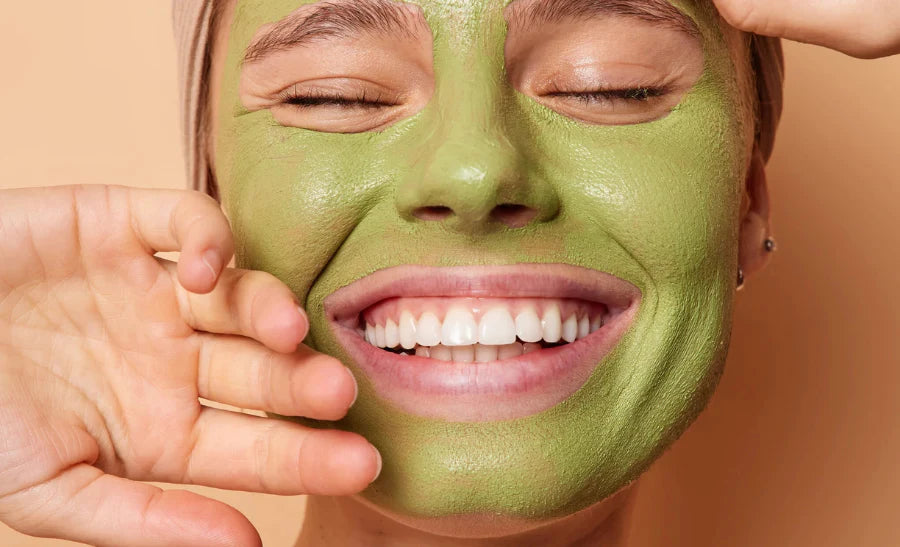
Matcha and Skin Health: Glowing from Within
Reading time: ±8 minutes | Last updated: April 2026
Matcha is one of the most powerful natural allies for healthy skin, thanks to its exceptionally high concentration of antioxidants, catechins, and anti-inflammatory compounds. The EGCG in matcha protects skin cells from UV damage, reduces inflammation that causes acne, and can slow the signs of skin aging (Journal of Dermatological Science, Katiyar et al., 2001). In this article, you will discover the five ways matcha supports your skin from within, backed by scientific research.
Most people know matcha as an energy drink or coffee alternative. But the benefits extend beyond focus and metabolism. Your skin, the largest organ in your body, directly benefits from the bioactive substances you ingest with every cup of matcha. Also read the 7 proven health benefits of matcha for the complete overview.
5 ways matcha protects your skin
Quick answer: Matcha protects the skin against UV damage, reduces acne and inflammation, slows skin aging, regulates sebum production, and improves circulation for a natural glow.
|
# |
Benefit |
Active ingredient |
Source |
|
1 |
Protection against UV damage |
EGCG, polyphenols |
Katiyar et al., 2001 |
|
2 |
Reduction of acne |
EGCG, catechins |
Yoon et al., 2013 |
|
3 |
Slowing of skin aging |
EGCG, vitamin C, E |
Heinrich et al., 2011 |
|
4 |
Regulation of sebum production |
EGCG |
Yoon et al., 2013 |
|
5 |
Improved circulation (glow) |
Methylxanthines, chlorophyll |
Breakaway Matcha Research |
1. Protection against UV damage
Quick answer: The polyphenols in matcha protect skin cells against UV radiation by neutralizing free radicals. One study showed 25% less redness after UV exposure in green tea drinkers.
Ultraviolet (UV) radiation from the sun is the primary external cause of skin aging, pigment spots, and an increased risk of skin cancer. The polyphenols in matcha, especially EGCG, provide protection at the cellular level.
Research published in the Journal of Dermatological Science (Katiyar et al., 2001) showed that the polyphenols in green tea protect skin cells against UV-induced DNA damage. The catechins act as an internal sunscreen by neutralizing free radicals formed by sunlight.
A clinical study (Heinrich et al., 2011, published in the Journal of Nutrition) followed women who consumed green tea for 12 weeks and found that their skin showed 25% less redness after a controlled UV dose compared to the control group. The same participants also had measurably improved skin structure: more elasticity, less roughness, and better moisture balance.
Important: matcha is not a replacement for sunscreen. It provides an extra layer of protection from within, but external sun protection (SPF 30+) remains essential, even on cloudy days.
2. Reduction of acne and inflammation
Quick answer: EGCG in matcha inhibits the P. acnes bacteria and reduces the inflammatory response that causes breakouts, redness, and irritation.
Acne is fundamentally an inflammatory process: bacteria (specifically Propionibacterium acnes) in the pores cause an immune response that leads to redness, swelling, and pimples. EGCG intervenes on both sides of this process.
A study published in the Journal of Investigative Dermatology (Yoon et al., 2013) showed that EGCG inhibits the growth of P. acnes bacteria while simultaneously lowering the inflammatory markers IL-8 and NF-kB. The effect was significant: test subjects who applied EGCG topically showed a measurable reduction in acne lesions after 8 weeks.
Interestingly, you can achieve this effect not only through skincare, but also from within. By drinking matcha, the catechins spread through the bloodstream to the skin. This makes matcha a supplement to your existing skincare routine, not a replacement for it.
Matcha is replacing coffee for more and more people with skin issues. Coffee stimulates cortisol (stress hormone), which can exacerbate acne. Matcha lowers cortisol thanks to L-theanine. Read more about matcha vs coffee for the full difference.
3. Slowing of skin aging
Quick answer: The antioxidants in matcha (EGCG, vitamin C and E) protect collagen and elastin against breakdown by free radicals, which slows the formation of wrinkles and fine lines.
Skin aging is largely caused by oxidative stress: free radicals that break down collagen and elastin (the proteins that keep your skin firm and elastic). Antioxidants neutralize these free radicals.
Matcha is one of the richest natural sources of antioxidants, with an ORAC score of 1,573 per gram, over fifteen times higher than blueberries and six times higher than goji berries (USDA, 2012). The specific combination of EGCG, vitamin C, and vitamin E in matcha offers a broad spectrum of protection.
The aforementioned study by Heinrich et al. (2011) confirmed this: women who consumed green tea for 12 weeks had measurably more elasticity and less roughness in their skin, independent of external skincare.
This effect is cumulative: the longer and more regularly you drink matcha, the stronger the protection. It is not a miracle cure that makes wrinkles disappear, but it slows the process by which they form.
4. Regulation of sebum production
Quick answer: EGCG reduces the production of sebum (skin oil) by regulating the activity of sebaceous glands, which is beneficial for people with oily skin or acne.
Oily skin is not just a cosmetic problem; it also increases the risk of clogged pores and acne breakouts. The sebaceous glands in your skin produce sebum, which protects the skin, but overproduction causes problems.
Laboratory studies have shown that EGCG can reduce sebum production by sebocytes (sebaceous gland cells) by 50 to 70% (Yoon et al., 2013). This effect is comparable to some pharmaceutical acne treatments, but without the side effects.
In practice, people who drink matcha daily often report that their skin feels less oily after 2 to 4 weeks, especially in the T-zone (forehead, nose, chin). While not scientific proof, it is consistent with laboratory data.
5. Improved circulation and a natural glow
Quick answer: The methylxanthines and chlorophyll in matcha improve microcirculation in the skin, resulting in a healthier, radiant complexion.
The "glow" effect that many matcha drinkers talk about has a physiological basis. Matcha contains methylxanthines (including caffeine and theobromine) that stimulate microcirculation in the tiny blood vessels under the skin's surface. Increased circulation means more oxygen and nutrients to the skin cells.
Furthermore, matcha is exceptionally rich in chlorophyll, the pigment that causes its bright green color. Chlorophyll has mild detoxifying properties: it binds to certain toxins and heavy metals in the body and supports their elimination. Although clinical evidence for this is still limited, preliminary studies suggest that chlorophyll can contribute to a clearer, more even complexion (Linus Pauling Institute, Oregon State University).
The combined effect of improved circulation and chlorophyll is what matcha drinkers often describe as an "inner glow": a healthy, radiant complexion that doesn't come from a bottle, but from within.
Drinking matcha vs. matcha on your skin: what works better?
Quick answer: Both work, but they do different things. Drinking matcha protects from within (systemically). Matcha on your skin (topically) works directly on the area where you apply it. Combining both is most effective.
|
Drinking matcha |
Matcha on the skin |
|
|
Method |
Systemically via bloodstream |
Locally on application site |
|
Reach |
Entire body (including skin) |
Only where you apply it |
|
Antioxidant absorption |
Via digestion (75-80%) |
Via skin barrier (limited) |
|
Effect on acne |
Reduces inflammation systemically |
Inhibits P. acnes locally |
|
UV protection |
From within (supplemental) |
No significant SPF value |
|
Best for |
Long-term, broad protection |
Targeted treatment, masks |
|
How to combine |
Drink 2 cups of matcha daily |
Weekly matcha face mask |
You achieve the best results by combining both: drinking matcha daily for systemic protection, and using a matcha face mask weekly for targeted skin care. In a future article, we will explain how to make an effective matcha face mask at home.
How much matcha should you drink for beautiful skin?
Quick answer: 2 cups of ceremonial matcha per day (4 grams of powder) provide sufficient EGCG and antioxidants to achieve a measurable effect on the skin. The first results are often visible after 2 to 4 weeks of consistent use.
The studies that demonstrated skin benefits worked with dosages equivalent to 3 to 4 cups of green tea per day, which corresponds to about 200 to 400 mg of catechins. Since matcha contains 3 to 4 times more catechins per cup than regular green tea, you hit the effective zone with 2 cups of matcha per day (4 grams of powder, about 200 to 300 mg of catechins).
Do not expect a miracle after one day. Most matcha drinkers report the first visible skin improvements after 2 to 4 weeks of consistent daily use: a more even complexion, less shine, and a subtly radiant effect. After 8 to 12 weeks, the effects on elasticity and wrinkles become measurable (according to the study by Heinrich et al., 2011).
Additional tips for maximum effect on your skin: drink matcha pure or with a little plant-based milk (avoid sugar), ensure sufficient sleep (the skin repairs itself at night), drink 1.5 to 2 liters of water per day, and use sunscreen (SPF 30+) daily.
Matcha vs. collagen supplements: what works better for your skin?
Quick answer: Matcha protects the collagen you already have from breakdown. Collagen supplements attempt to add new collagen. The evidence for matcha's protective effect is stronger than for oral collagen supplements.
The collagen supplement industry is a multi-billion dollar market, but the scientific evidence is mixed. Oral collagen is broken down into amino acids in the digestive system, and it is unclear how much of it actually ends up as collagen in the skin.
Matcha approaches it differently: instead of adding collagen, it protects the collagen you already have. The antioxidants in matcha neutralize the free radicals that break down collagen. It is the difference between filling a bucket (adding collagen) and plugging the hole (stopping the breakdown).
Both approaches are not mutually exclusive. However, if you have to choose, the evidence for antioxidant protection (via matcha) is scientifically stronger and more broadly substantiated than for oral collagen supplements.
Disclaimer: This article is for informational purposes and does not replace dermatological advice. Do you have persistent skin problems such as severe acne, eczema, or rosacea? Consult a dermatologist. Matcha is a supplement to a healthy lifestyle and skincare, not a medicine.
Frequently asked questions about matcha and skin health
Is matcha good for your skin?
Yes. The antioxidants and catechins (especially EGCG) in matcha protect skin cells against UV damage, reduce inflammation that causes acne, slow signs of skin aging, and regulate sebum production. Clinical studies show that regular consumption of green tea components leads to measurably improved skin structure after 8 to 12 weeks.
Does matcha help with acne?
EGCG in matcha inhibits the growth of the acne-causing bacteria P. acnes and lowers the inflammatory markers that cause pimples (Yoon et al., 2013). Drinking matcha offers systemic protection from within. The effect is strongest in combination with a good skincare routine and avoiding sugary foods.
Can matcha slow skin aging?
Yes. The antioxidants in matcha (EGCG, vitamin C and E) protect collagen and elastin against breakdown by free radicals. A study by Heinrich et al. (2011) showed that women who consumed green tea for 12 weeks had more skin elasticity and less roughness than the control group. The ORAC score of matcha (1,573 per gram) is fifteen times higher than that of blueberries.
How much matcha should you drink for beautiful skin?
2 cups of ceremonial matcha per day (4 grams of powder) is sufficient to reach the effective zone of 200 to 300 mg of catechins. The first visible improvements (more even complexion, less shine) are often noticeable after 2 to 4 weeks. Effects on elasticity become measurable after 8 to 12 weeks.
What does matcha do for your skin compared to coffee?
Matcha and coffee have opposite effects on the skin. Matcha lowers cortisol (the stress hormone) via L-theanine, protects collagen, and reduces inflammation. Coffee increases cortisol, can stimulate sebum production, and contributes to tooth staining. Many people with skin issues notice improvement after switching from coffee to matcha.
Beauty starts with what you drink
The skincare industry wants you to believe that beautiful skin comes from a jar. And good products certainly help. But the foundation starts with what you put into your body. Plenty of water, good nutrition, sleep, and yes, matcha.
It is not a magic bullet. You won't see a difference after one cup. But after two weeks of drinking matcha daily, you will notice it: calmer skin, less oiliness, and a subtle glow that wasn't there before. It is the cumulative effect of thousands of small protective actions that the antioxidants in matcha perform, day after day, cup after cup.
Ready to experience it yourself? At Unmatched Matcha, you will find ceremonial matcha from Kagoshima with high EGCG concentrations. Two cups a day is all you need. Your skin will thank you.