How to make a matcha face mask: 3 DIY recipes
19-05-2026 · 6 min read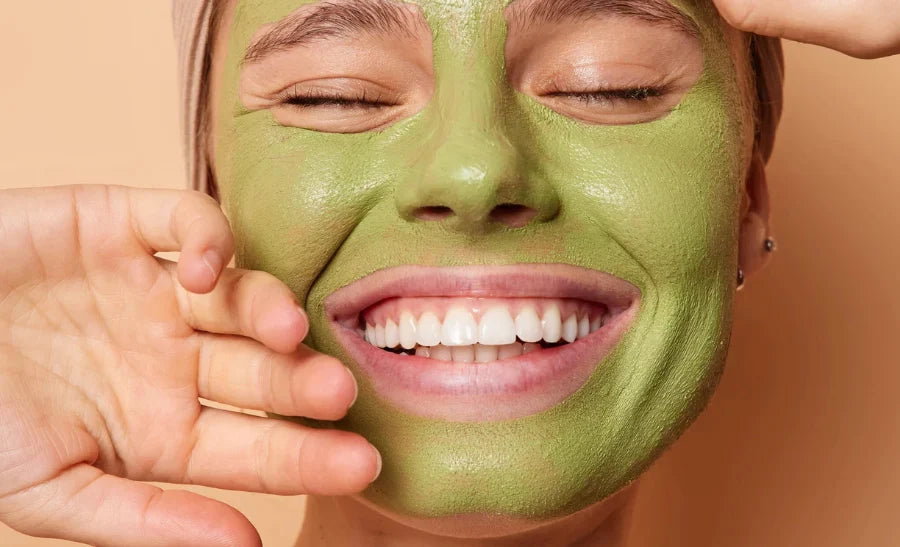
Making a matcha face mask: 3 DIY recipes
Reading time: ±6 minutes | Last updated: May 2026
A matcha face mask is one of the simplest and most effective DIY skincare treatments you can make at home. The EGCG (epigallocatechin gallate) in matcha is one of the most powerful plant-based antioxidants, offering protection against UV damage, free radicals, and inflammation (Katiyar et al., Archives of Dermatology, 2001). Combined with chlorophyll (soothing) and caffeine (firming), matcha is an all-in-one skincare ingredient.
In this article, we share three matcha face mask recipes for different skin types, explain the science behind them, and provide tips for the best results.
Why matcha is good for your skin: the science
Quick answer: EGCG in matcha protects against UV damage and free radicals, chlorophyll soothes irritated skin, and caffeine stimulates blood circulation and minimizes pores. Together, they reduce redness, aging, and blemishes.
|
Compound |
Effect on skin |
Scientific basis |
|
EGCG |
Antioxidant, UV protection, anti-aging |
Katiyar et al., Arch. Dermatology, 2001 |
|
Chlorophyll |
Soothing, anti-redness, wound healing |
Stephens et al., Clin. Podiatric Med., 2008 |
|
Caffeine |
Vasoconstrictive, pore-tightening |
Herman & Herman, Skin Pharmacology, 2013 |
|
Vitamin C |
Collagen stimulation, skin brightening |
Pullar et al., Nutrients, 2017 |
|
Tannins |
Astringent, regulates excess sebum |
Traditional use, not specific to matcha |
More about EGCG and the skin? Read matcha and skin health: what does science say.
Which matcha should you use for a face mask?
Quick answer: For a face mask, culinary grade matcha is sufficient. There is no need to "waste" ceremonial matcha on skincare. Culinary grade contains the same active compounds (EGCG, chlorophyll, caffeine) in slightly lower concentrations, but works excellently topically.
This is one of the few situations where we recommend culinary grade matcha. The reason: your skin benefits from the EGCG and chlorophyll regardless of the grade. The difference in L-theanine (which affects taste) is irrelevant for topical use.
Only have ceremonial matcha at home? That will obviously work too; it’s just more expensive. In that case, use the smallest amount required by the recipe.
Recipe 1: The Classic Matcha Mask (all skin types)
Quick answer: Matcha, honey, and yogurt. Three ingredients, 5 minutes. Suitable for all skin types. The honey hydrates, the yogurt gently exfoliates (lactic acid), and the matcha protects.
Ingredients:
• 1 teaspoon matcha powder
• 1 tablespoon raw honey
• 1 tablespoon full-fat yogurt (Greek yogurt works best)
Preparation:
1. Mix the matcha, honey, and yogurt in a small bowl until you have a smooth, green paste.
2. Apply the mask to a clean, dry face. Avoid the eye area.
3. Leave on for 10 to 15 minutes.
4. Rinse off with lukewarm water and pat your face dry with a clean towel.
5. Follow with your usual moisturizer.
What it does: the honey hydrates and has antibacterial properties. The yogurt contains lactic acid, a mild AHA (alpha-hydroxy acid) that removes dead skin cells. The matcha provides EGCG and chlorophyll, which protect and soothe. Result: softer, smoother skin with a healthy glow.
Recipe 2: Matcha Detox Mask (oily/blemished skin)
Quick answer: Matcha and green clay. Two ingredients that absorb excess sebum, shrink pores, and reduce blemishes. Ideal for the T-zone.
Ingredients:
• 1 teaspoon matcha powder
• 1 tablespoon green clay (e.g., French green clay or kaolin clay)
• 2 to 3 tablespoons water (enough for a spreadable paste)
Preparation:
1. Mix the matcha and clay in a bowl while dry.
2. Slowly add water while stirring until you have a smooth, spreadable paste.
3. Apply to a clean face, focusing on the T-zone (forehead, nose, chin).
4. Let dry for 10 minutes. The mask will feel tighter as it dries.
5. Rinse off with lukewarm water. Follow with a light moisturizer.
What it does: the green clay absorbs excess sebum and pulls impurities out of the pores. The caffeine in matcha has a vasoconstrictive effect that optically minimizes pores. The EGCG acts as an anti-inflammatory against active breakouts.
Recipe 3: Matcha Hydration Mask (dry/sensitive skin)
Quick answer: Matcha, avocado, and coconut oil. A rich, nourishing mask that intensely hydrates and soothes dry skin. Ideal in winter or after sun exposure.
Ingredients:
• 1 teaspoon matcha powder
• 1/4 ripe avocado (mashed)
• 1 teaspoon coconut oil (liquid or softened)
Preparation:
1. Mash the avocado in a bowl until it is a smooth puree.
2. Stir in the matcha and coconut oil until you have a homogeneous, green paste.
3. Apply generously to a clean face.
4. Leave on for 15 to 20 minutes.
5. Rinse off with lukewarm water.
What it does: avocado is rich in vitamin E and healthy fatty acids that repair the skin barrier. Coconut oil softens and protects. The matcha adds EGCG (antioxidant) and chlorophyll (soothing). Result: soft, hydrated skin with less redness.
Which mask should you choose?
|
Classic |
Detox |
Hydration |
|
|
Skin type |
All |
Oily/blemished |
Dry/sensitive |
|
Main effect |
Glow, protection |
Regulate sebum |
Nourish, soothe |
|
Application time |
10-15 min |
10 min |
15-20 min |
|
Frequency |
1-2x per week |
1x per week |
1-2x per week |
|
Ingredients |
3 |
3 |
3 |
|
Season |
All year |
Spring/summer |
Autumn/winter |
Tips for the best results
Always perform a patch test first. Apply a small amount of the mask to the inside of your wrist or behind your ear. Wait 24 hours. No redness or irritation? Then it is safe for your face.
Cleanse your face first. A mask works best on clean skin, free from makeup, dirt, or excess sebum. Cleanse with your usual cleanser and pat dry before applying the mask.
No more than 2x per week. Face masks are a supplement to your skincare routine, not a replacement. 1 to 2 times a week is sufficient. More often can irritate the skin.
Do not store; make fresh every time. The ingredients oxidize quickly after mixing. Always make a fresh portion.
Disclaimer
This article is informative and does not replace dermatological advice. If you have skin conditions (eczema, psoriasis, acne rosacea), consult a dermatologist before applying new products to your skin. Matcha is generally well-tolerated, but individual reactions are possible.
Frequently asked questions
How do you make a matcha face mask?
Mix 1 teaspoon of matcha powder with 1 tablespoon of honey and 1 tablespoon of yogurt until smooth. Apply to a clean face, leave on for 10 to 15 minutes, and rinse with lukewarm water. This base recipe is suitable for all skin types.
Is matcha good for your skin?
Yes. The EGCG in matcha is a powerful antioxidant that protects against UV damage and free radicals (Katiyar et al., 2001). Chlorophyll soothes irritated skin and caffeine has a vasoconstrictive effect that optically minimizes pores. Matcha is used in both DIY masks and professional skincare products.
Which matcha should you use for a face mask?
Culinary grade matcha is sufficient for skincare. It contains the same active compounds (EGCG, chlorophyll, caffeine) as ceremonial matcha. The difference in L-theanine is irrelevant for topical use. Ceremonial matcha works too, but is more expensive.
How often can you use a matcha face mask?
1 to 2 times a week is enough. More frequent use can irritate the skin, especially if you use clay-based masks. Always perform a patch test on your wrist or behind your ear first.
What does matcha do for your face?
Matcha protects against UV damage (EGCG), reduces redness and inflammation (chlorophyll), optically shrinks pores (caffeine), gently exfoliates in combination with yogurt (lactic acid), and provides a healthy glow. It is an all-in-one skincare ingredient.
Skincare you can drink (and apply)
Matcha is one of the few ingredients that works both internally and externally. Drink it for the antioxidants, focus, and energy. Apply it to your face for the protection, soothing, and glow. It is the same compound (EGCG) that protects your skin in both ways.
The best part: you only need one product. A bag of matcha in the kitchen is both your morning ritual and your skincare treatment.
Order matcha from Unmatched Matcha for your cup and for your face. Free shipping in the Netherlands for orders over €50.