First harvest matcha: Why it matters so much
02-06-2026 · 6 min read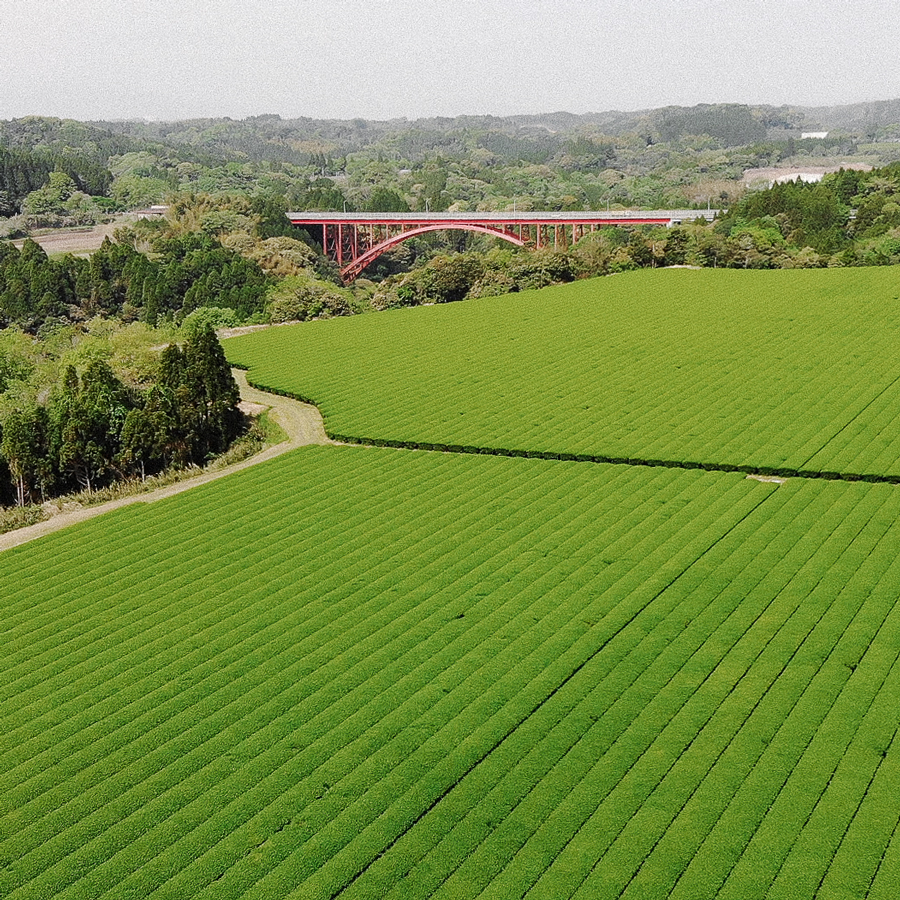
First flush matcha: Why it matters so much
Reading time: approx. 7 minutes | Last updated: June 2026
First flush matcha, known as ichibancha in Japanese, is the very first harvest of the tea plant after winter and contains the highest concentration of L-theanine, caffeine, and amino acids of the entire year. During the winter months, the tea plant accumulates nutrients in its shoots. These are released into the early spring leaves during the first harvest, typically from late April to mid-May.
This is why ceremonial matcha is always a first flush, and why this quality threshold is so strict. A later harvest isn't necessarily bad tea, but it is fundamentally a different product. Also read our article on Kagoshima vs Uji matcha: the difference and which is better for more context on how origin and harvest together determine quality.
Definition: Ichibancha (first flush) is the first picking of the tea plant in the spring. Nibancha (second flush) follows in the summer. Sanbancha and yonbancha are the third and fourth pickings in the autumn. With each successive harvest, L-theanine levels drop significantly.
Why Does First Flush Have More L-Theanine?
Quick answer: During winter, the tea plant stores amino acids in its roots and stem. During the first spring growth spurt, these stored amino acids, particularly L-theanine, flow to the young shoots. Later harvests pick leaves produced during a growing season without that winter storage.
The tea plant acts like a battery. In autumn and winter, the plant directs all its energy into storing nutrients. L-theanine is created in the roots via an enzymatic reaction between ethylamine and glutamic acid, and stored in the stem and branches. As soon as the temperature rises in spring, that stored L-theanine flows to the first young leaves.
A study published in PMC (Nozaki et al., PMC9137484) confirms the high L-theanine and caffeine concentrations in first flush matcha. The data show caffeine levels of 16.1 mg/g and L-theanine of 9.85 mg/g in high-quality first flush matcha, consistent with USDA FoodData Central reference values for ceremonial matcha.
Ichibancha vs Nibancha: The Numbers
Quick answer: First flush matcha contains up to 3x more L-theanine than second flush. Second flush contains more catechins (including EGCG), which adds more bitterness. First flush is softer, sweeter, and richer in amino acids. Second flush is sharper and better suited for baking.
|
Characteristic |
Ichibancha |
Nibancha |
Sanbancha |
Verdict |
|
L-theanine |
High (3x) |
Moderate (1x) |
Low (<0.5x) |
1st flush wins |
|
Caffeine |
High |
Moderate |
Low |
1st flush wins |
|
Catechins (EGCG) |
Lower |
Higher |
Highest |
2nd/3rd flush |
|
Bitterness |
Minimal |
Moderate |
High |
1st flush wins |
|
Color |
Bright green |
Medium green |
Olive green |
1st flush wins |
|
Taste |
Umami, soft |
Green, sharper |
Bitter, sharp |
1st flush wins |
|
Suitable for |
Drinking (pure) |
Lattes, baking |
Baking |
Use-dependent |
|
Price |
High |
Moderate |
Low |
Quality reflection |
The Harvesting Process: Why Manual Picking Matters
Quick answer: The first young shoots (shincha) for ceremonial grade are always hand-picked. Only the top two or three leaves are selected. Mechanical harvesting damages the leaves and picks up older leaves as well, which lowers the quality.
Tencha: the foundation of matcha
First flush matcha begins as tencha: shade-grown leaf that is steamed, dried, and de-stemmed. Only this first-harvest tencha is ground into ceremonial matcha. De-stemming (removing stems and veins) creates a more uniform, softer flavor profile and a finer texture after grinding.
Shading enhances the first flush effect
For ceremonial matcha, shading (at least 20 days before harvest) is combined with the first harvest. Shading further increases L-theanine production because the plant creates amino acids in response to the lack of light. The combination of winter storage and shading gives first flush ceremonial matcha its characteristic deep green color, soft taste, and high L-theanine concentration. Read more about how L-theanine affects your focus and stress levels.
First Flush in Kagoshima: Why the Region Matters
In Kagoshima, Japan's southernmost main island, the first harvest begins slightly earlier than in other regions: typically late April. The subtropical climate, the volcanic soil of Sakurajima, and the temperature differences between winter and spring create ideal conditions for L-theanine accumulation.
Unmatched Matcha exclusively uses first flush tencha from Kagoshima. No second or later harvests, no blends. That is exactly why the taste is so soft and umami-rich, and why customers who previously drank bitter matcha are surprised by the difference. For a deeper understanding of the region, read our article on Kagoshima vs Uji matcha.
How Do You Recognize Real First Flush Matcha?
-
Color: bright green to emerald green, never yellow or olive green
-
Scent: fresh, grassy, slightly sweet, no mustiness
-
Taste: soft umami, minimal bitterness, long aftertaste
-
Texture: ultra-fine, dissolves effortlessly in water
-
Labeling: transparent producers list 'first flush', 'ichibancha', or 'first harvest' on the packaging
-
Price: first flush ceremonial matcha costs at least €15-20 per 30 grams; lower prices indicate a later harvest
First Flush and Health Benefits
The higher L-theanine concentration in first flush matcha has direct health implications. L-theanine lowers cortisol, improves focus via alpha waves, and has been shown in three randomized studies to improve sleep quality. In second flush matcha, this effect is weaker due to lower L-theanine levels. Furthermore, for athletes: first flush provides more caffeine per gram, which strengthens the pre-workout effect. Read our article on matcha and sports: better performance and faster recovery for more context.
Residents of Amsterdam, Rotterdam, Utrecht, The Hague, Haarlem, Almere, Zaandam, Hoofddorp, Purmerend, Laren, Soest, Venlo, and Alphen aan den Rijn who drink matcha daily benefit the most from ceremonial first flush matcha from Kagoshima. The quality differences are real and measurable.
Frequently Asked Questions about First Flush Matcha
What is first flush matcha?
First flush matcha (ichibancha) is the first harvest of the tea plant in the spring, typically from late April to mid-May. The plant has stored amino acids during the winter that are released into the first young shoots. This gives first flush matcha the highest L-theanine, the softest taste, and the brightest green color.
How much more L-theanine does first flush have?
First flush matcha contains up to 3x more L-theanine than second flush and 6x more than third flush. This difference is directly measurable in the taste: more umami, less bitterness, and a longer aftertaste.
Is second flush matcha bad, then?
Not bad, just for a different purpose. Second flush has more catechins and more bitterness, making it suitable for baking, smoothies, and lattes where the taste is combined with other ingredients. For pure drinking or as a daily ritual, first flush is superior.
When is first flush matcha harvested?
In Kagoshima, late April; in Uji and other regions, mid-to-late May. The exact timing differs by year depending on temperature and weather conditions. First flush has a short harvest period of only 2-3 weeks per year.
How do I know if my matcha is first flush?
Check the packaging for terms like 'ichibancha', 'first flush', or 'first harvest'. A transparent supplier will always state this. Also look at the color: bright green is first flush, yellow-green or olive green indicates a later harvest. Unmatched Matcha exclusively uses first flush from Kagoshima.
First flush matcha is not a marketing term but a measurable quality standard. The winter storage of amino acids, the early spring harvest, and the shading combine to create a product with the highest L-theanine, the softest taste, and the most vibrant color. Ceremonial matcha is by definition first flush. Discover the range of Unmatched Matcha, first flush from Kagoshima, free shipping from €50.